Nvidia's 31.5% jump isn't a vote for Huang. It's a governance alarm
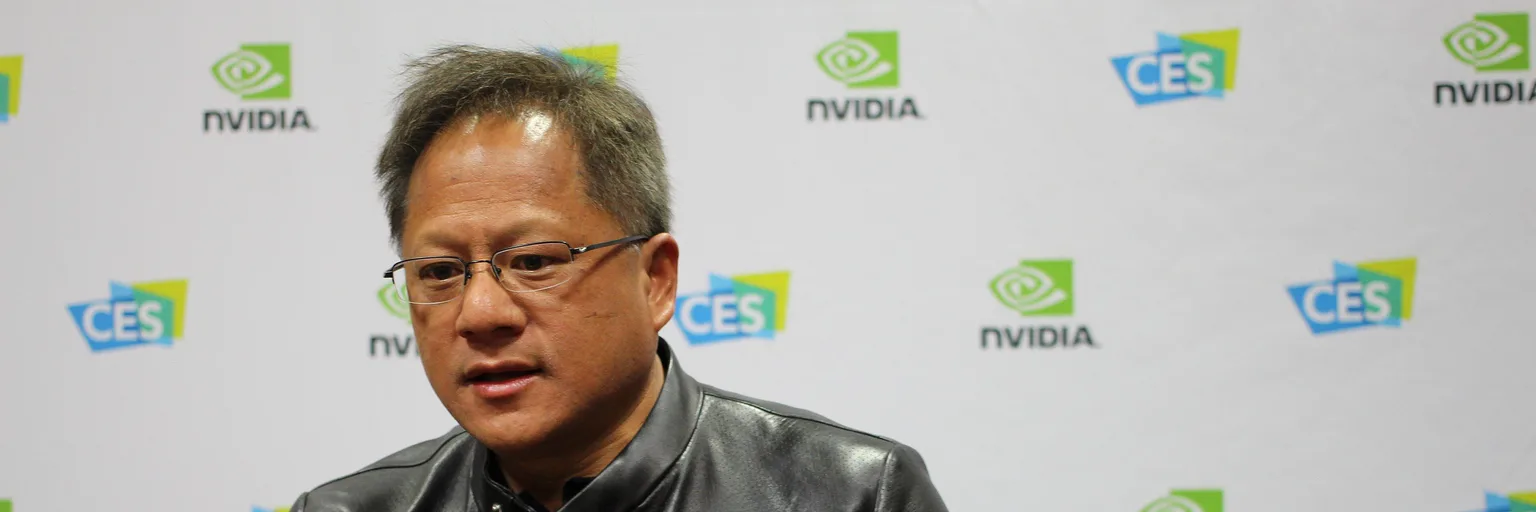
The market cheered Jensen Huang's return with a $900 billion rebound. Cheering a CEO reversal shows how much AI valuation hangs on one man, and boards shouldn't run on applause.

The new US rules go after cloud access to AI chips, not just shipments. We think that leaves Singapore chasing predictable supply and makes Alibaba's AI cloud bet riskier.
Folding robotics into general models may be efficient, but it also dissolves the specialists who would know why a robot dropped the bottle, and that matters more than the benchmark.
When a neocloud's debt yields more than 16%, the AI boom stops being a story about demand and becomes one about who can afford to keep borrowing.
Whatever the probe finds, a company this central to AI cannot run on one man's judgment. Its governance has to treat the CEO's exposure as a security and investor matter.
The post-election tech rout suggests data-center backlash is now a political force, and Big Tech's buildout can no longer count on a permissive Washington.
Ottawa, Schwarz Group and Nvidia are funding sovereign AI through a national champion, but the flag is the easy part and compute and paying customers are the real test.
The Megaspeed spy report is less about one executive than about an export system that takes customers at their word. Nvidia needs to own its customer vetting.
Benchmarks will be forgotten in a month. A trillion-parameter model anyone can download and run is harder to take back, if the license and the hardware let Europeans use it.
OpenAI reportedly buying Google TPUs says less about Nvidia losing than about buyers refusing to depend on anyone, rivals included.
The STAR 50 crash doesn't prove AI is fake. It shows what happens when valuation, concentration and crowded trading stack up, and those ingredients exist elsewhere too.
Millions of Epyc chips next to Nvidia's Vera: Meta is buying from both camps, and the humble server CPU may be quietly turning into a strategic bottleneck in AI.
One of the most profitable companies on earth is passing the hat to shareholders. The question isn't whether Meta can raise $95 billion, but what return justifies it.
Open-source Linux modules double the RTX 4090's FP16 tensor throughput without adding hardware, which suggests the limit was about segmentation, not silicon.
Nvidia capped GeForce Now and Xbox is about to meter Game Pass streaming. The bill for server time has arrived, and players are the ones getting it.
As Washington and Beijing build rival AI stacks, hedging is getting harder. Choosing a side means choosing dependencies, standards and who can switch you off.
Cerebras says its wafer-scale chips serve multi-trillion-parameter models at 1,000+ tokens per second. That's credible, but buyers should demand latency and cost data, not demos.
By funding the neoclouds that buy its GPUs, Nvidia has tied its fortunes to their survival. As those stocks slide, circular financing looks less like a moat and more like exposure.
A pulled Solidigm IPO and distressed neocloud debt suggest the AI build-out has become a financing story, and the weak link is borrowed capacity without proven demand.
Ecosia dumping Mistral and Berlin courting Nvidia aren't betrayals. They show Europe should pick which dependencies to cut instead of chasing sovereignty from chips to apps.
Another global selloff in AI shares looks less like a rejection of the technology and more like investors demanding durable revenue instead of spending stories.
Beijing's draft export controls would turn cheap open models into a geopolitical lever, just as Huawei and DeepSeek build a parallel stack. Plan for supply risk.
TorchNeuron will make PyTorch workloads easier to run on Trainium, but lowering chip-switching costs is not the same as making AI infrastructure truly portable.
A new 'Code Execution Model' from doubleAI, backed by industry giants, promises to optimize AI performance by bridging the critical gap between software and hardware, fundamentally reshaping how we approach computational efficiency.
The collaboration between Honeywell, NVIDIA, and Dell signals a pivotal shift in industrial AI, moving beyond reactive systems to proactive, optimized manufacturing through integrated AI agents and digital twins.
The long-awaited NVIDIA RTX Spark has arrived, directly challenging Apple Silicon's lead in high-performance local AI processing on Windows PCs.
As Russia deploys fully autonomous drones, Ukraine's AI-powered interceptors and offensive capabilities are not just a response, but a testament to how intelligent systems are now central to modern asymmetric conflicts.
Intel, AMD, and Nvidia's latest data center GPU and server rack announcements at OCP confirm an intensifying AI infrastructure battle, promising innovation but also significant cost challenges.
NVIDIA's latest DLSS 5 iteration showcases impressive technical strides in VRAM reduction and neural rendering, yet its demanding hardware requirements and early community skepticism raise questions about mainstream adoption.