Meta's CPU deals show the AI boom isn't just about GPUs anymore
Millions of Epyc chips next to Nvidia's Vera: Meta is buying from both camps, and the humble server CPU may be quietly turning into a strategic bottleneck in AI.
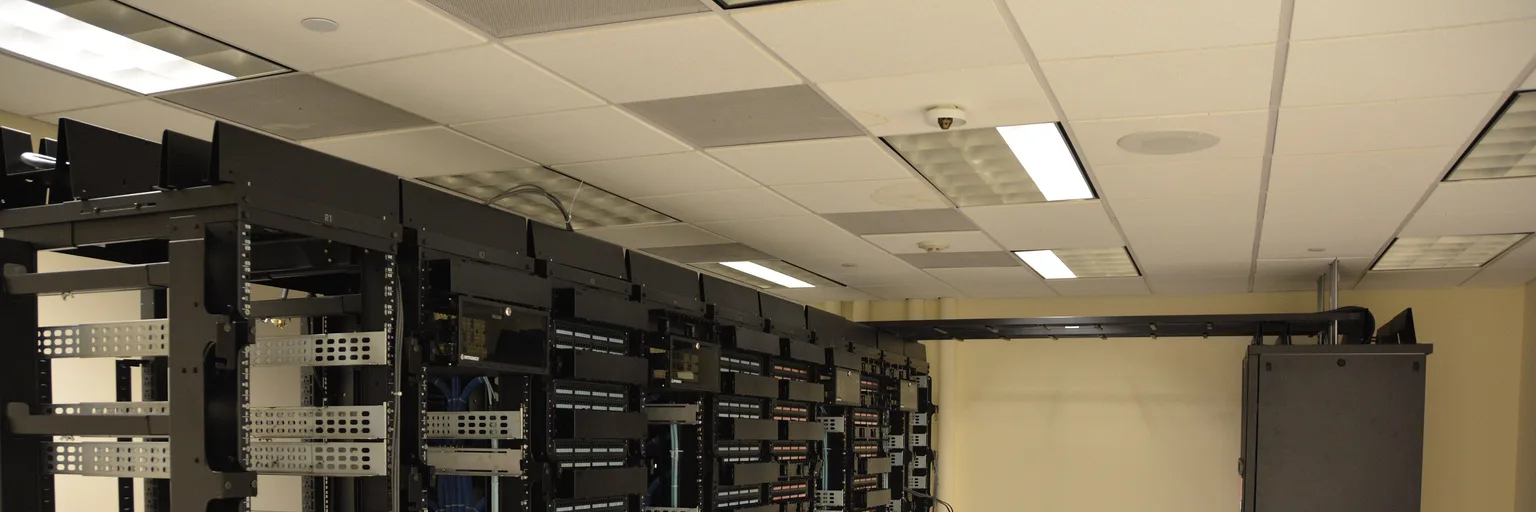
Photo: Carl Lender from Sunrise, USA / Wikimedia Commons (CC BY 2.0)
For three years, the AI infrastructure story had one protagonist: the GPU. So it's worth pausing when a buyer this size expands, at the same moment, with both AMD and Nvidia on processors. The CPU is back, and it isn't coming back quietly.
Here's what we know. Meta and AMD, and Meta and Nvidia, are widening their server partnerships. According to ComputerBase, Meta already runs millions of Epyc processors across several generations, according to AMD, and is the lead customer for the sixth generation, "Venice." On the Nvidia side, Meta plans to deploy more Vera Rubin systems and Vera processors, plus networking such as Spectrum-X and BlueField-4, per stock-world.de. Quantities and timelines weren't disclosed.
The GPU is the star, but the CPU may decide how busy it stays
Why would a company spending this much on accelerators fuss over host processors? Our reading: because AI work is changing shape. Oracle's description of its new Epyc-based E7 instances is telling. They're pitched for agent orchestration, concurrent agent sandboxes, retrieval services and in-memory caches, as Wccftech reports. None of that is matrix math. It's the glue around the model, and agents generate a lot of glue.
Training a giant model is a GPU problem. Running millions of agents that browse, call APIs, spin up sandboxes and fetch documents looks increasingly like a general-purpose compute problem. That's our interpretation, but the product pitches line up with it. The CPU stops being the boring box that feeds the accelerator and may become a capacity line item of its own.
There's circumstantial evidence of tightness, too. A Tech Times piece from September 30 carries a headline saying Venice supply is exhausted for 2027. We only have the headline, so treat that as a claim, not a settled fact. Still, it fits the pattern.
Meta isn't picking a side, it's avoiding dependence on one
The most interesting detail isn't that Meta buys AMD or that it buys Nvidia. It's that it does both for the same layer of the stack. AMD and Nvidia are openly competing here: AMD claims its 96-core Venice is around 20% faster than Nvidia's 88-core Vera in SPEC CPU 2026 Integer Rate. Those are vendor benchmarks, so salt required.
We think Meta gets leverage out of that rivalry. A customer committing to Epyc while also taking Vera for tightly integrated Nvidia racks can negotiate with both. The Tech Times piece makes a related point: the two CPUs target different purchasing decisions, with Vera the more natural choice for the NVLink rack-scale stack. In our view, that's the sensible split. Use x86 where the software estate lives, use Nvidia's CPU where the rack is Nvidia's anyway.
It also looks like a hedge against the scariest scenario for any hyperscaler: a single supplier setting both price and delivery dates.
The uncomfortable part: who pays for all this?
Before anyone declares a new golden age for server CPUs, look at the money. Per stock-world.de, Meta reported negative free cash flow of $2.12 billion in the third quarter of 2026 and expects 2026 capital expenditures of $135–145 billion. The same piece, citing Reuters, says Meta has raised its planned equity offering to $97.5 billion, with Nvidia intending to put $3 billion into it, subject to closing conditions.
That's the real caveat. When the supplier funds the customer, orders and financing start to blur. Dr. Robert Sasse told Börse Express that customer financing now belongs in the valuation of the supplier. We agree with the framing, even if we don't share anyone's price target.
Our verdict
The takeaway isn't "CPUs beat GPUs." It's that the AI bill of materials is broadening: CPUs, networking, DPUs, memory, power. Whoever treats AI as a one-chip market is already behind. For AMD, having Meta as lead customer for Venice is, in our view, a big win, because it helps turn Epyc from a cloud staple into an AI-era asset. For Nvidia, it's a reminder that its CPU ambitions face a rival that, we'd argue, has a head start in x86 software compatibility.
If you're a buyer or an investor, watch two things: actual orders and delivery schedules, not announcements, and whether agent workloads really keep eating CPU cycles the way vendors promise. Until the numbers show up, this is a smart hedge by Meta, and a signal about where the bottleneck may be moving. It's not yet proof that the spending pays off.
No topics yet: start the first one.
More stories
Alphabet's $500B wipeout is a verdict on AI capex, not a one-off
Alphabet's worst day ever and Amazon's wobble show investors have stopped paying for AI promises. Now the giants must prove returns, and not all can.

Intel's post-earnings plunge shows the PC slump is the AI boom's collateral damage
Intel beat the quarter and still saw its shares sink after hours. The real story isn't a turnaround stumbling; it's PCs getting squeezed while the money flows elsewhere.

Amazon's cloud boom no longer buys AI capex a free pass
AWS posted its fastest growth in years and Wall Street still sold Amazon. The AI race is turning into a balance-sheet contest, and cash coverage is the new scoreboard.
Canada's $1.6B Cohere bet only works if the champion has compute
Ottawa, Schwarz Group and Nvidia are funding sovereign AI through a national champion, but the flag is the easy part and compute and paying customers are the real test.