Nvidia's 31.5% jump isn't a vote for Huang. It's a governance alarm
The market cheered Jensen Huang's return with a $900 billion rebound. Cheering a CEO reversal shows how much AI valuation hangs on one man, and boards shouldn't run on applause.
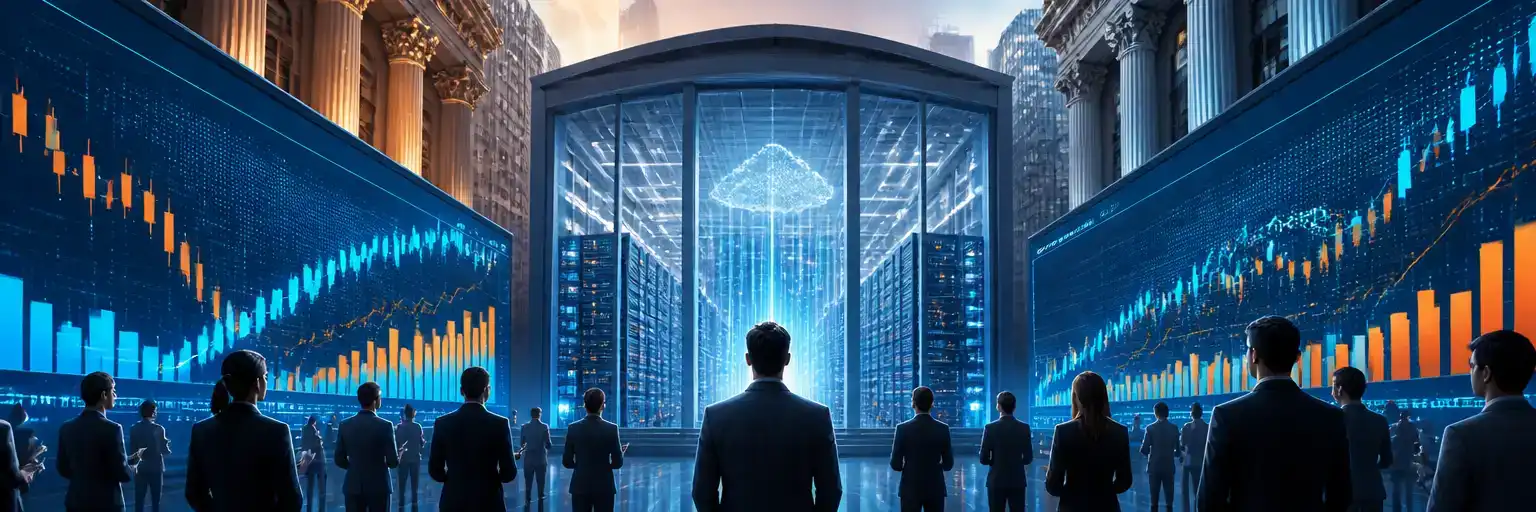
AI-generated image
What is a company worth when its value can fall by more than $1 trillion in a month and then bounce back by more than $900 billion in a single session? Not much certainty, in our view. Nvidia's reversal on Jensen Huang is being sold as a happy ending. We read it as a stress test the system barely passed.
The sequence was brutal. On November 12 the board announced that Huang had resigned after personal behavior inconsistent with the code of conduct. On November 17, Wired reported that the chair said the board "does not intend" to reinstate him. Then on Monday, November 23, the board unanimously brought him back. According to Geo TV's market report, Nvidia shares rose 31.5%, the Nasdaq gained 6.5%, and Meta, Alphabet and Amazon all climbed. Reuters and others report that this happened under pressure from President Trump. Meanwhile, investigations, including the FBI's, continue.
A rally this big is a price on dependence, not on merit
Nothing about Nvidia's business changed in any obvious way between the board's "no" and its "yes." Wired noted that the quarter just reported had $115.8 billion in revenue, above analyst expectations of roughly $109 billion, with data center sales up 110% from a year earlier. Demand was fine while the stock was sinking. So the swing, as we read it, wasn't about chips. It was about whether one person was in the building.
That is the uncomfortable lesson. The AI trade is supposed to rest on enormous infrastructure spending and real demand. Yet a Sunday board decision, as Bloomberg's account has it, moved the whole Nasdaq. Part of that was bargain-hunting after a week in which, per the same Geo TV report, major indices lost between 7% and 10%. Still, a single-name headline lifting Meta, Alphabet and chipmakers shows how fragile and correlated the sentiment is. We think that is a risk factor, not a comfort.
Governance shouldn't be decided by who the market loves
The board's whiplash is the real story. Days after saying it would run a thorough CEO search, it reversed, citing input from senior US government officials. CNN's headline frames it as a boardroom blunder, and analysts quoted by investinglive say the U-turn raises questions about the board's judgment. We agree with them.
Notice what this means. A board that had accepted Huang's resignation over a code-of-conduct problem changed course once the share price, political allies and a petition from industry executives made that position costly. To us, those look like pressure signals. They aren't new facts about conduct. The board says it is satisfied with Huang's candor, and the independent investigation into the foreign intelligence allegations continues. But if the inquiry could still find something, why was the reinstatement so fast? We don't know, and that is the point.
Then there is the political layer. Trump took public credit, called Huang a "Great Patriot and National Treasure," and shared a doctored image of him. A company at the center of export controls and national security now has a CEO whose return was visibly brokered at the top of government. Whatever the merits, that is an awkward position for an independent board to be in.
What investors should actually take from this
Huang's fans have a case. He led for 33 years, and Wired reports he earned loyalty by limiting layoffs and red tape. Removing a founder amid a crisis is risky, and the market's relief is understandable. One fund manager quoted by investinglive even calls the stock undervalued at around 11 times forward earnings.
But relief is not resolution. Analysts quoted by Geo TV warned that the underlying worries, like how AI buildouts get financed and the risk of further rate hikes, remain. Seoul's market fell more than 3% in the same news cycle. Our advice is simple. Treat the 31.5% as a one-day mood, not a re-rating. Ask whether a board that reversed itself in less than two weeks can be trusted to oversee a CEO who faces at least four investigations. And ask what succession looks like at the company that is the backbone of AI.
If Nvidia is too important for its CEO to be held accountable, or too important to lose, the problem isn't Huang. It's a market that has made one executive load-bearing. Cheering that is understandable. Building a portfolio on it is not.
No topics yet: start the first one.
More stories
OpenAI v. Apple: the AI alliance was always a fight over the device
OpenAI's countersuit accusing Apple of trade secret theft and supplier pressure shows AI partnerships end where hardware begins. Suppliers and staff get squeezed first.
A million satellites approved: the FCC gave SpaceX a claim, not a data center
In our view, the FCC's Starmind approval is a land grab in orbit. It doesn't show that AI compute works in space, and cooling, launches and debris remain open.

The real AI tax is the invoice that changes after you sign
Dell, HPE, Lenovo and Supermicro are reportedly adding up to 45% for memory after orders. It's a seller's market, and buyers need price locks.
Anthropic's $83 IPO is a referendum on AI, not a stock tip
At a $1.5 trillion valuation, Anthropic's listing tests whether Wall Street still believes in frontier AI. Retail buyers should weigh the risk disclosures before the hype.