The AI boom now runs on credit, and credit is getting nervous
A pulled Solidigm IPO and distressed neocloud debt suggest the AI build-out has become a financing story, and the weak link is borrowed capacity without proven demand.
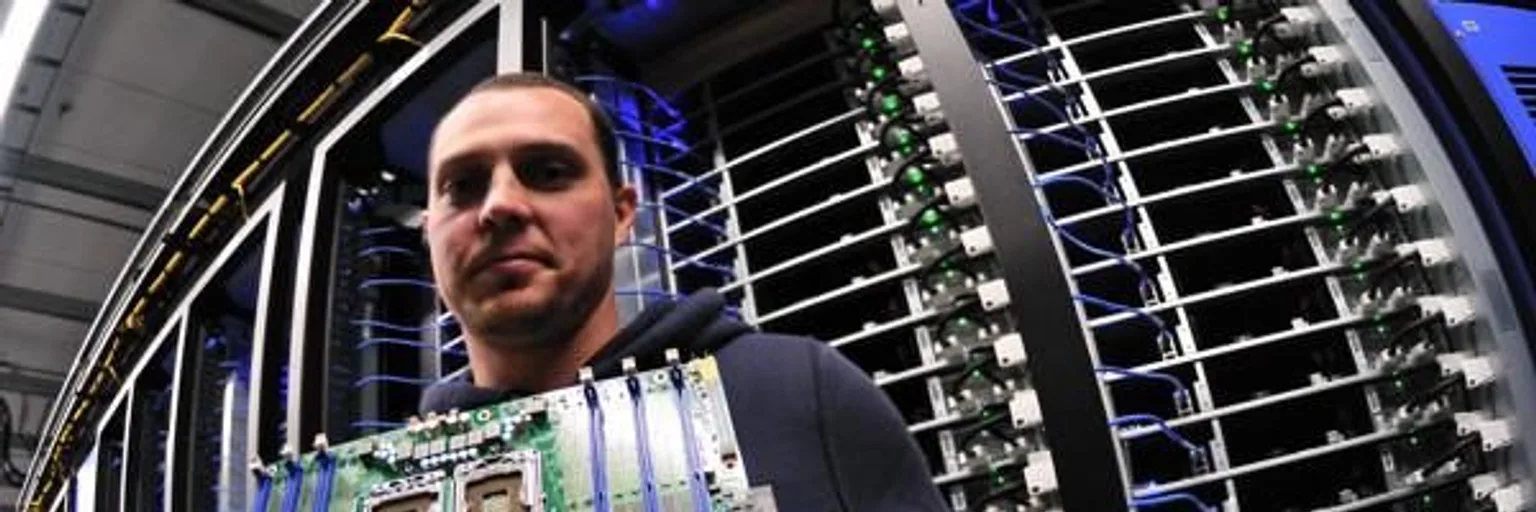
Photo: Carl Lender from Sunrise, USA / Wikimedia Commons (CC BY 2.0)
Which matters more for the future of AI this month: a shiny new model or the yield on a bond most people will never see? We think it's the bond. The week's evidence says the AI build-out has stopped being a technology story and become a financing one.
Here is what happened. As CNBC reports, CoreWeave, Nebius and IREN have each lost well over 30% in October. CoreWeave's credit default swap spreads have widened past 11%, a level generally viewed as distress, and yields on its 2031 and 2032 unsecured notes topped 15%. Meanwhile SK Hynix pulled the planned IPO of its Solidigm unit. People familiar with the deal had said it could raise US$15 billion at a US$150 billion valuation.
Solidigm is a symptom, not the disease
SK Hynix blames market volatility, and South Korean regulators had also raised shareholder-protection concerns, so it would be sloppy to read the cancellation as purely an AI verdict. The company itself said the decision "does not reflect any change in Solidigm's growth prospects or investment needs." Fair enough.
But the timing is the point. Reuters notes that other deals have been shelved too, including Australia's Firmus and a Singapore REIT listing for AirTrunk, as investors fret over rising borrowing costs in a debt-heavy sector. The IPO was meant to help fund a US factory. When the equity window shuts, the capacity plan still needs money from somewhere. That is the real signal: not that demand vanished, but that the cheap way to pay for supply did.
Neoclouds are the weak link, and the market knows it
CoreWeave is the cleanest case study. Reuters reported that it carries $50 billion in debt. A business that rents out GPU capacity, financed by high-yield paper, only works if the customers show up on schedule and keep paying. When bonds yield 15%, the market is saying it doubts one or both.
Nvidia's Jensen Huang says "demand for the neoclouds is off the charts" and that the shortage is of capital, a problem he expects to "get solved." We'd note the quiet admission in that sentence: if the binding constraint is capital, then financing is the story. And Gartner's forecast that 80% of neoclouds will either cease operations or be absorbed by 2030 is a prediction, not a fact, but it fits the shape of the sector: many leveraged players, thin moats, one dominant supplier.
One caveat in the neoclouds' favor: a Roundhill executive described the selling as throwing "every baby out with the bathwater." Some indiscriminate panic is probably in the price. Not every neocloud is CoreWeave.
The giants are not immune, just better insulated
Don't take comfort in the mega-caps. They have kept their investment-grade ratings, but Meta reported negative free cash flow of over $2 billion in the third quarter, raised its full-year capex floor to $135 billion, and disclosed plans for about $825 billion in leases and contracts, over $450 billion of them non-cancellable take-or-pay. Its five-year CDS hit record highs, and Nvidia and Oracle touched records as well.
Our reading: the hyperscalers can survive being wrong, and the neoclouds mostly can't. But take-or-pay commitments are exactly how a demand miss travels down the chain to the smaller, more leveraged names.
What to watch instead of launch events
Model releases tell you what AI can do. Credit tells you whether anyone can keep paying for the machines. So watch CDS spreads, unsecured bond yields, whether IPO windows reopen, and how Alphabet, Microsoft and Amazon talk about capex in next week's earnings.
Our verdict: this isn't proof of a bubble popping, and demand may well be real. But debt-funded capacity ahead of proven demand is how booms get tested, and the test has started. If you follow AI as an investor or a buyer of cloud capacity, check your suppliers' balance sheets before their roadmaps.
No topics yet: start the first one.
More stories
Google's Gmail and Photos ad shift only works if it's truly opt-in
Google's own pages promised it wouldn't use Drive, Gmail or Photos content for ads. The new exception may be narrow, but the only honest design is a clear opt-in.

If the models are so good, why is OpenAI still selling access?
A Hacker News thread asks why AI labs don't just build companies with their own models. The answer says more about AI's business reality than about its benchmarks.
The AI stock shudder is markets asking for proof, not a verdict
Another global selloff in AI shares looks less like a rejection of the technology and more like investors demanding durable revenue instead of spending stories.
Meta keeps beating revenue, and Wall Street still wants receipts for AI
Meta topped its own revenue forecast again, but its AI build now costs more than its business earns in cash, and the market wants to see returns.