Meta selling stock for AI shows even Big Tech's cash has limits
One of the most profitable companies on earth is passing the hat to shareholders. The question isn't whether Meta can raise $95 billion, but what return justifies it.
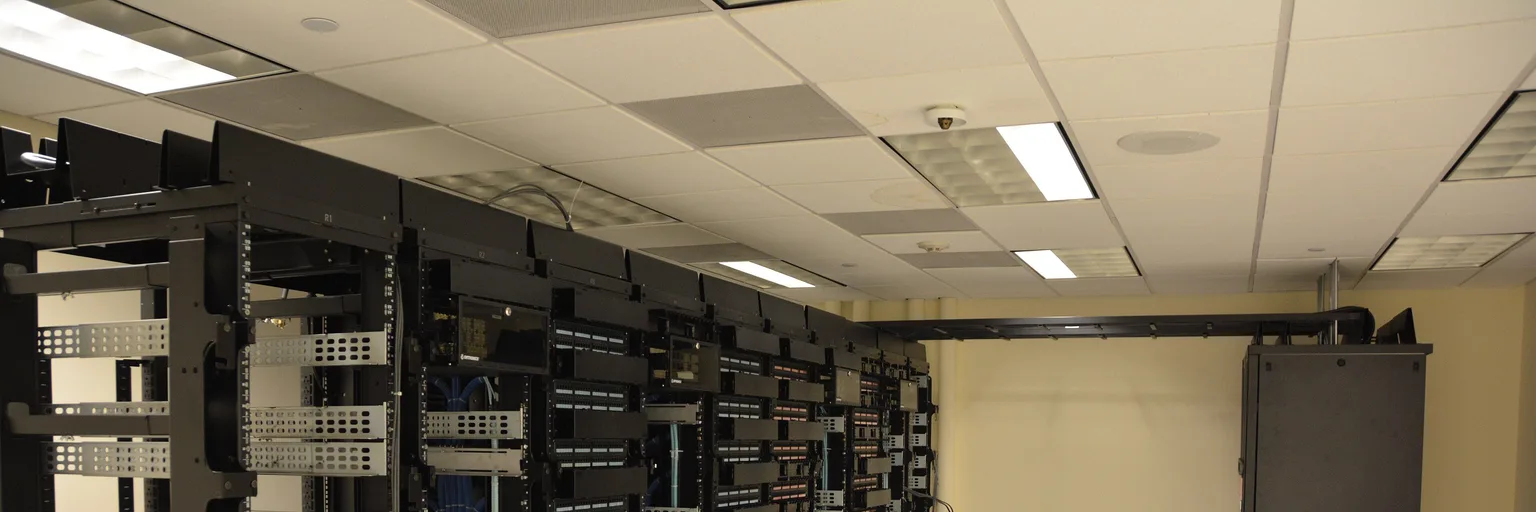
Photo: Intel Free Press / Wikimedia Commons (CC BY 2.0)
When a company that has printed money for years asks the stock market for $95 billion, it's worth stopping to ask what changed. Meta didn't suddenly get poor. The AI race simply got bigger than even its cash machine.
The $95 billion ask is really two deals, and only one is firm
On Monday, Meta said it plans to raise up to $95 billion, its largest equity fundraising ever, as The Globe and Mail reports. The first piece is a public offering of about $35 billion in common and preferred stock. Global Banking & Finance breaks that down as $22.5 billion of Class A common and $12.5 billion of mandatory convertible preferred. The second piece is an at-the-market program of up to $60 billion, which comes after new non-voting Class C shares start trading, expected in the first quarter of 2027. Timing and terms aren't final.
The shares fell about 1.4% in morning trading. That's a shrug, not a panic, and we think it says as much about the market's appetite for AI spending as about Meta.
The cash machine stopped being enough
The most telling number isn't the offering. According to the same report, Meta burned $2.12 billion in the third quarter, its first negative free cash flow in over a decade. A year earlier it generated $10.63 billion. Meanwhile it raised the low end of its annual capex forecast to a range of $135 billion to $145 billion, and it has committed to spend about $825 billion in the future, mostly on data centers, AI infrastructure and cloud computing power.
Put those together and the logic is plain. At Sept. 30, Meta had $82.45 billion in cash and securities against $80.92 billion in long-term debt. That is not a company short of money, but in our view it no longer has a comfortable cushion for an $825 billion plan. Our reading is that equity lets it avoid piling on more debt, and that this is less a sign of weakness than proof that the capex race has outgrown the internal-funding model Big Tech used to lean on.
It isn't alone, either. The report notes that Alphabet increased its equity offerings to $84.75 billion earlier this year, and that big tech is increasingly tapping debt and equity markets after previously relying on cash. Meta is a data point in a trend, not an outlier.
Circular money and a founder who keeps control
Two details deserve more suspicion than the headline. First, Nvidia, AMD and Broadcom have expressed interest in buying up to $5 billion in total of Class A shares. Chip suppliers helping fund one of their biggest customers is exactly the "circular flow of capital" concern the report mentions. That isn't necessarily a problem in itself, but we think it makes demand for AI hardware harder to read. When your supplier is also your investor, sales numbers say less about real end demand.
Second, the governance. The Class C shares are non-voting, and the company has said it would issue them to fund acquisitions and retain top talent while maintaining Mark Zuckerberg's control. New stock dilutes existing shareholders, and a non-voting class means they gain no extra say. Meta also agreed to grant Zuckerberg Class C shares he can sell to help pay a potential California billionaire wealth tax. We'd call that a remarkable footnote to a financing story: investors fund the AI bet while the founder keeps the steering wheel.
What investors should demand
To be fair, there are reasons for patience. The report says the early popularity of Meta's consumer AI agent Muse and a competitive new series of models help partly justify the spending. William Blair analysts say they believe Meta will ultimately build a profitable AI business, "although the path may not be linear." They also expect investors to keep questioning the financing and possible future raises.
We'd go further. A $35 billion offering can be defended once. A pattern of raising money every time capex climbs cannot. Our view is that shareholders should ask for specifics: what revenue does each tranche of data center capacity support, and by when? "Staying in the race" is a strategy for survival, not a return on capital.
The verdict: Meta isn't doomed, and the market's calm suggests many still believe in the payoff. But the era of AI funded from the cash register looks over. If you own Meta, treat dilution, circular financing and negative free cash flow as the new baseline, and judge the company on the returns it shows, not the size of the checks it writes.
No topics yet: start the first one.
More stories
The midterms turned AI regulation into a line item on Wall Street
The post-election tech rout suggests data-center backlash is now a political force, and Big Tech's buildout can no longer count on a permissive Washington.
Tech's layoffs aren't about AI replacing you: they're about paying for it
Big Tech blames AI for mass buyouts and cuts, but the record capex bill looks like the likelier culprit. Workers should read that narrative with a sharp eye.

Apple's "no AI for AI's sake" is a strategy, but only if it ships
John Ternus turns restraint into principle while rivals sprint. It's smart positioning, but principle without useful features is just a polite word for late.

The AI boomerang: cutting first and measuring later is costing twice
Companies rehiring the workers they replaced with AI aren't proof the tech failed. They're proof that "efficiency" was announced before anyone measured it.