Your hard drive costs more because AI got in line first
Hard drives are sold out to hyperscalers for years, and consumers and small businesses are left paying inflated prices for whatever is left over. We should say so plainly.
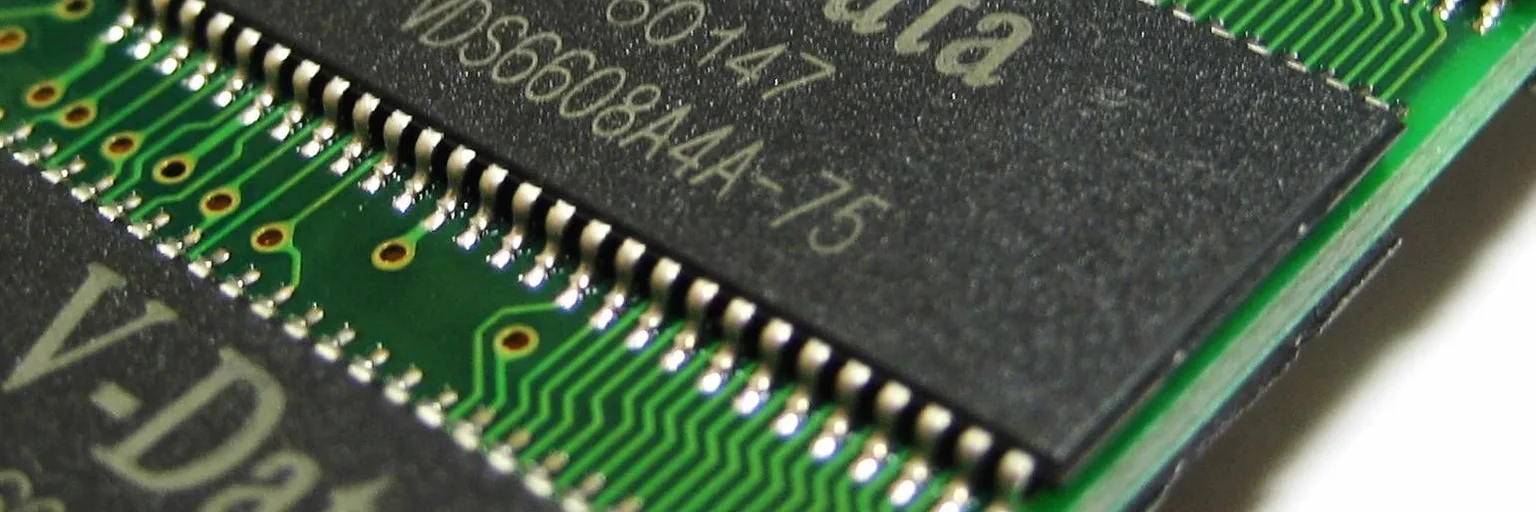
Photo: uıɐɾ ʞ ʇɐɯɐs / Wikimedia Commons (CC BY-SA 2.0)
Who pays for an AI data center? The companies building it, sure. But if you've shopped for a hard drive lately, you've probably chipped in too, and nobody asked you.
The picture is fairly consistent across the material we've reviewed. In February, Western Digital CEO Tiang Yew Tan said, in a quote reproduced by heise: "We're pretty much sold out for calendar year 2026." He added that the company had firm purchase orders with its top seven customers, plus agreements stretching into 2027 and 2028. Seagate said its nearline capacity was fully allocated through 2026. A web page dated Nov. 25 claims hard drive prices have jumped 100-200% since 2024 and about 50% year over year. Other pages cite figures between 46% and roughly 50%. These are web-page claims, not audited data, so treat the exact numbers loosely. The direction isn't in doubt.
The queue was never first come, first served
One of the pages we reviewed claims hyperscaler cloud customers account for 89% of HDD revenue. That is a single unverified figure, but it fits what the CEOs said themselves. If your best customers sign multiyear commitments, the spot market gets what's left. That market is you, your NAS, your backup drive and your small-business file server.
Nothing in the material we reviewed suggests anything illegal here. Manufacturers are rationally serving the buyers who commit years ahead. But rational for them still means a tax on everyone else. We think it's fair to call it a subsidy of sorts: ordinary buyers absorb the scarcity so that AI buildouts can lock in supply.
Storage was supposed to be the boring part
Hard drives were the dull, dependable corner of the PC world. Cheap capacity was the one thing you could count on. That assumption is gone. Tom's Hardware, in a Black Friday deals piece, says storage prices are at all-time highs and that finding deals on large drives is rare. Its headline deal is a 20TB WD Elements external drive at $549.99, down from a listed $879.99, which works out to 2.75 cents per GB. The outlet calls that its lowest price of the year so far. Read that again: the bargain is $549.99.
The squeeze reaches beyond disks. TechRadar, writing about a budget mini PC, notes sharp price hikes hitting processors, storage, memory and "virtually everything else" this year. One of the pages we reviewed also says a NAND shortage is pushing buyers toward disk, which would stack pressure on pressure. We'd treat that as plausible but unconfirmed.
What to do, and what to demand
Practically, it's a bad year to be casual about capacity. Delete what you don't need. Buy only for what you'll fill in the next year. Don't treat a Black Friday discount as proof of a fair price, because a discount off an inflated list price is still inflated. Tom's Hardware itself warns that previous prices vary by retailer and may reflect rolling averages or "estimated value" amid shortages. Shucking external drives to save money is tempting, but the same article cautions that it voids the warranty and some drives use custom power connectors.
Beyond shopping, we think the industry owes people plainer language. When AI demand is the cause, say so, and don't hide behind "market conditions." Our verdict: this probably isn't a temporary blip to wait out. With contracts reportedly reaching 2028, the sensible assumption is that cheap bulk storage is on hold. Plan your budget accordingly, and don't let anyone tell you the AI boom is costing you nothing.
No topics yet: start the first one.
More stories
The FAA ground stop is a warning about old tech, not AI
A nationwide ground stop blamed on overloaded routers and a mix of analog and digital systems shows that neglected infrastructure is a bigger risk than any AI headline.

Google's orbital haiku is charming. Space data centers still need hard proof
Suncatcher's first reply from orbit is a genuine engineering step, but a haiku from one TPU at a time says little about whether AI compute in space can beat Earth.
The AI boom has a hidden tax, and your next PC or phone is paying it
Samsung's chip profits are soaring while it warns the shortage will last through 2028. Buyers are covering the AI buildout through pricier devices, and brands should say so.
Apple's touchscreen Mac wasn't a change of heart, just a change of timing
Apple mocked touchscreen laptops for years, then built a $2,899 one. The real question isn't hardware: it's whether macOS was finally designed for fingers.