Canada's $1.6B Cohere bet only works if the champion has compute
Ottawa, Schwarz Group and Nvidia are funding sovereign AI through a national champion, but the flag is the easy part and compute and paying customers are the real test.
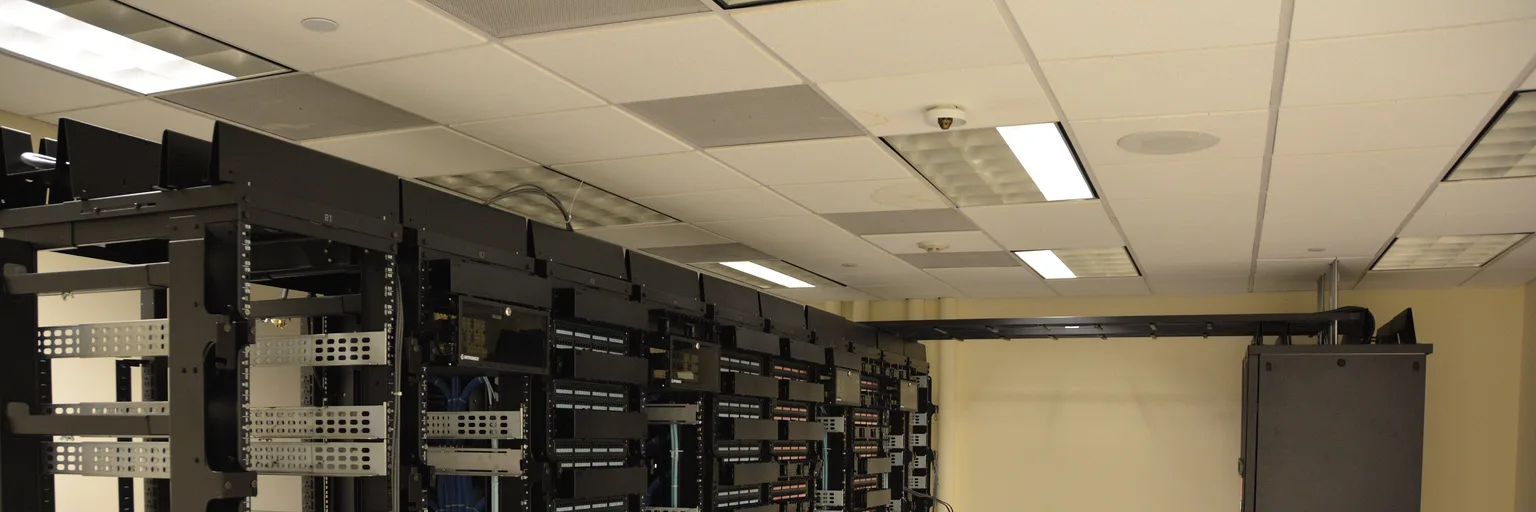
Photo: Carl Lender from Sunrise, USA / Wikimedia Commons (CC BY 2.0)
Can a government buy sovereignty in artificial intelligence with a check? Canada is about to find out. It has just picked its horse, and the bet is large enough that the answer will matter well beyond Toronto.
Ottawa isn't handing out a grant, it's buying a stake
On October 29, Prime Minister Mark Carney announced that Ottawa will make an equity investment of up to $1.6 billion in Cohere. According to the Prime Minister's office, it is a commercial investment, announced alongside private investors including Nvidia, Bell and Schwarz Group. It is part of a Series E round targeting up to CAD 7 billion, which dpa reports is led by Germany's Schwarz Group (Lidl, Kaufland) and values the company at roughly CAD 35.7 billion.
The detail that matters most is not the headline number. The Globe and Mail reports that Cohere has committed to spend $1.7 billion on compute infrastructure in Canada by 2030 and to stay headquartered in the country.
A flag is not a moat
The national-champion model has an obvious appeal: pick one company, pour in public and private money, and call it sovereignty. We think it's a reasonable bet, but only if you read "sovereign" as a technical property rather than a patriotic one. A model that carries a maple leaf but runs on someone else's infrastructure, under someone else's terms, is a logo, not independence.
That's why the compute pledge is the most interesting part of the deal. It ties public money to something physical and checkable. It's also modest next to the ambition. Nobody should read a commitment to 2030 as proof that Canada now has frontier-scale capacity. We'd treat it as a down payment, and we'd want to see annual progress, not just the final figure.
Cohere's pitch is at least coherent. According to dpa, its technology is designed to work independently of the big US data center operators and can run in private clouds, on a customer's own hardware or in fully isolated environments. For banks, health systems and governments, that is a real selling point, not a slogan.
The customer is the real sovereign
Here's where we're more skeptical of the hype. Sovereignty doesn't come from who owns the shares. It comes from who depends on whom. A champion survives only if regulated industries and governments actually choose it over cheaper or flashier alternatives, and keep choosing it.
Cohere has made a choice that helps. Unlike OpenAI or Anthropic, it focuses exclusively on enterprises and governments rather than consumers, according to dpa. That's a narrower market, but a stickier one, and the opposite of a popularity contest. The Schwarz tie-up also looks smart: the group's IT arm wants Cohere's models inside its own STACKIT cloud. Its CEO, Christian Müller, said that digital sovereignty is about "strategic freedom of choice, interoperability and keeping the keys to your own data in your own hands" (our translation from the German). That's a customer talking, and customers are what a champion needs.
The Aleph Alpha deal points the same way. It was billed as a "transatlantic merger" but is, de facto, a takeover of the Heidelberg company by Cohere, which keeps Heidelberg as a central research and development site alongside its headquarters in Toronto and Berlin. German digital minister Karsten Wildberger said it would create "a global AI champion" (again, our translation). Fine. But it also shows how the champion model works in practice: consolidate scarce talent into one entity and hope scale follows. Whether Canadian and German priorities stay aligned when they collide is an open question.
Better than most industrial policy, but still a very big bet
The deal is better designed than most industrial policy. It's equity, not a grant, with conditions on headquarters and compute. That puts taxpayers in the same boat as private investors, which is healthier than the usual subsidy.
The risks are real, though. Industry observers read the round as possible groundwork for an IPO, which is speculation, but it hints at where the incentives may drift. Public money and public markets don't always want the same thing. And a Series E at this valuation leaves little room for disappointment.
Our recommendation to other governments watching: copy the conditions, not the headline. Ask what hardware gets built, where, and who signs the contracts. If Cohere can show enterprise and public-sector customers moving real workloads onto sovereign infrastructure, this will look prescient. If it can't, Canada will have bought a very expensive flag.
No topics yet: start the first one.
More stories
Amazon's cloud boom no longer buys AI capex a free pass
AWS posted its fastest growth in years and Wall Street still sold Amazon. The AI race is turning into a balance-sheet contest, and cash coverage is the new scoreboard.

Nvidia can't outsource its conscience to its customers
The Megaspeed spy report is less about one executive than about an export system that takes customers at their word. Nvidia needs to own its customer vetting.

OpenAI's Google chip plan isn't about Nvidia's fall. It's about fear of any single supplier
OpenAI reportedly buying Google TPUs says less about Nvidia losing than about buyers refusing to depend on anyone, rivals included.
Mosseri is right about the AI backlash, but forecasting it isn't a plan
Instagram's chief says anger at AI will only grow. Fair enough, but the platforms that flooded feeds with synthetic content owe users labels and real control, not predictions.