Death Plan Switch is useful—but it cannot be your whole legacy plan
A self-hosted dead man’s switch exposes a hard truth for solo developers: preserving access is only half the job; deciding what deserves access is the rest.
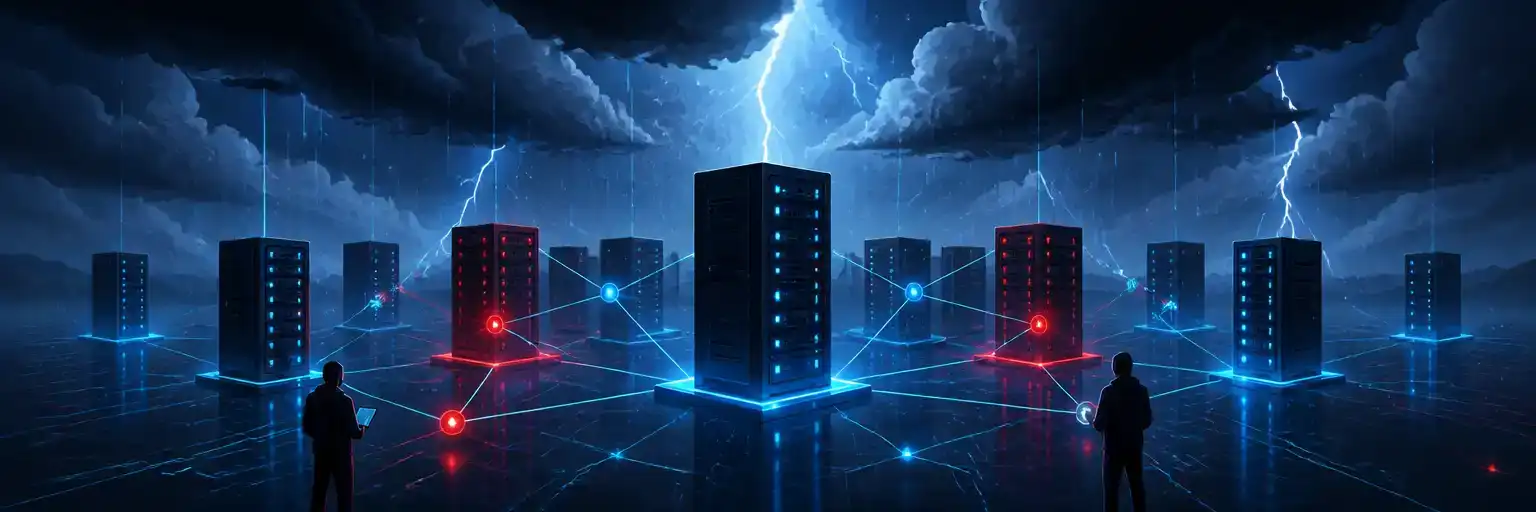
AI-generated image
The most uncomfortable question in a solo developer’s stack is not whether the server will fail. It is what happens when the person who understands the server is no longer available.
That is the problem behind Death Plan Switch, a self-hosted “dead man’s switch” presented on Hacker News as a free-to-download tool for solo developers. In general, a dead man’s switch uses missing confirmation as a signal to trigger a predefined action. That is useful. It is also dangerously incomplete if we mistake delivery for planning.
The real problem is not death; it is undocumented dependency
A digital legacy is the information available about someone after their death, including digital assets, online conversations, photos, videos, gaming profiles and websites, according to the Digital Legacy Association. For a solo developer, that may also mean source code, deployment credentials, domain registrations, cloud accounts, invoices, customer commitments and recovery keys.
The common failure is not necessarily that these things are encrypted. It is that nobody knows they exist, where they are hosted, or what should happen to them. A project may need to be archived. A service may need to be shut down. A client may need a handoff. A family member may need access to documents but absolutely not to production credentials. Those are different outcomes, and a single release mechanism cannot safely express them all.
This is why the Death Plan Switch concept matters beyond the tool itself. It prompts developers to see personal infrastructure as an estate rather than as a collection of private experiments. The solo operator may be the administrator, maintainer, billing contact and emergency support desk at once. That concentration is efficient while life is normal and fragile when it is not.
Our view is that a switch is best understood as an emergency door, not as a will.
Self-hosting improves control—and concentrates responsibility
There is an appealing logic to self-hosting a digital legacy system. The data does not have to be handed wholesale to a third-party service, and the mechanism can be inspected, adapted and operated according to the developer’s own model. That aligns naturally with people who already run their own infrastructure.
But self-hosting also creates a sharp contradiction: the person building the escape hatch may be the only person capable of keeping it alive. If the switch depends on one server, one domain, one backup, one email account or one person who knows the recovery phrase, it may fail precisely when it is needed.
Security makes the problem harder. A legacy plan contains unusually sensitive material, and the people who need access after an emergency may not have the technical ability to validate a cryptographic workflow. A system that is elegant for its creator can be unusable for an executor or relative. Worse, an overly broad payload can turn a carefully designed handoff into a permanent privacy breach.
That is the trade-off a simple switch can understate: control over the infrastructure is not the same as control over the outcome. A secure vault that nobody can operate is functionally a locked box. A convenient mechanism that releases everything is a security incident waiting for a false trigger.
Inactivity is a signal, not proof of death
The “dead man’s switch” metaphor is memorable, but silence is ambiguous. A developer might be hospitalized, traveling, locked out of an account, dealing with a family emergency or deliberately taking a break. A missing check-in can indicate that something has changed; it cannot establish why.
That makes staged escalation more sensible than a single irreversible release. A warning should go to the owner first, then to a trusted contact, with a recovery path before anything sensitive leaves the vault. The plan should also separate categories: personal memories, business records, operational instructions and secrets should not automatically share the same recipient or timing.
Platform policies complicate matters further. A 2025 review of digital-estate features notes that major services handle legacy access differently: some offer designated contacts or memorialization, while others require formal requests and documentation. Microsoft, for example, is described as relying on a next-of-kin process rather than a comparable pre-death setup. A self-hosted switch cannot override those terms, transfer non-transferable purchases or guarantee access to an account it does not control.
The right lesson is not to distrust automation. It is to give automation a narrower job.
The best legacy plan is boring, layered and regularly rehearsed
For a solo developer, the first deliverable should be an inventory, not a dramatic message scheduled for the future. Record what exists, why it matters, where it lives and who should handle it. Then create separate instructions for access, continuation, closure and deletion.
A trusted contact needs to know that the plan exists and how to begin—not necessarily every secret in advance. An executor may need legal authority. A technical colleague may need enough information to keep a service running. Family may need photos and documents, but not customer data. These roles should be explicit.
The Digital Legacy Association warns that people should make plans for their own accounts and devices rather than casually handing that responsibility to an outside organization. That is good advice for developers too. A vendor can provide a vault or workflow, but it cannot decide what an unfinished project means, which obligation comes first or what should remain private.
Death Plan Switch is therefore a useful prompt, not a complete answer. Solo developers should consider using this kind of mechanism for a carefully limited handoff—but only after documenting assets, assigning human responsibilities, adding multiple confirmation steps and testing recovery with the intended recipients.
The verdict is simple: automate the alert, not the judgment. A digital legacy is not merely the ability to unlock a server after someone is gone. It is a set of decisions that makes their absence less dangerous for everyone left to deal with the system.
No topics yet: start the first one.
More stories
GitHub's Fragility: Why Recurring Outages Demand a Reckoning
Repeated incidents of degraded availability on GitHub, affecting critical services like Actions and Pages, highlight a troubling pattern for modern software development's essential hub, raising urgent questions about trust and resilience.
Leap Seconds' Demise: Why Digital Stability Trumps Cosmic Alignment
The global decision to eliminate leap seconds by May 2027 marks a pivotal shift, prioritizing the unwavering stability of our digital infrastructure over the traditional, yet disruptive, alignment with Earth's imperfect rotation.
Meta's 'Your Algorithm': More Control or a Deeper AI Black Box?
Meta's new AI-powered 'Your Algorithm' promises unprecedented user control over feeds, but we argue it risks making the underlying system more opaque, not less.

Bitcoin's AI Hedge: Why It Wins in Every Economic Scenario
Bitwise CIO Matt Hougan presents a compelling argument: Bitcoin's unique characteristics ensure it thrives across every AI-driven economic future, whether that's explosive growth, a market crash, or steady evolution.