Teknosfera Newsroom
OpenAI Is Buying the Workflow, Not Just the Biotech Hype
The Orchestra Bio deal shows OpenAI wants to own the scientific feedback loops that turn powerful models into durable business—and that raises serious governance questions.
The Orchestra Bio deal shows OpenAI wants to own the scientific feedback loops that turn powerful models into durable business—and that raises serious governance questions.
The UN’s warning is not about science-fiction robots. It is about whether humans can remain accountable when AI moves life-and-death decisions closer to the battlefield.
Netflix’s new season expands Night City with riskier storytelling and striking craft, but its real lesson is about human direction—not documented AI assistance.
New research suggests coffee, including decaf, may reshape the gut microbiome in ways linked to mood, stress and cognition—without making it a miracle drink.
A new 'Code Execution Model' from doubleAI, backed by industry giants, promises to optimize AI performance by bridging the critical gap between software and hardware, fundamentally reshaping how we approach computational efficiency.
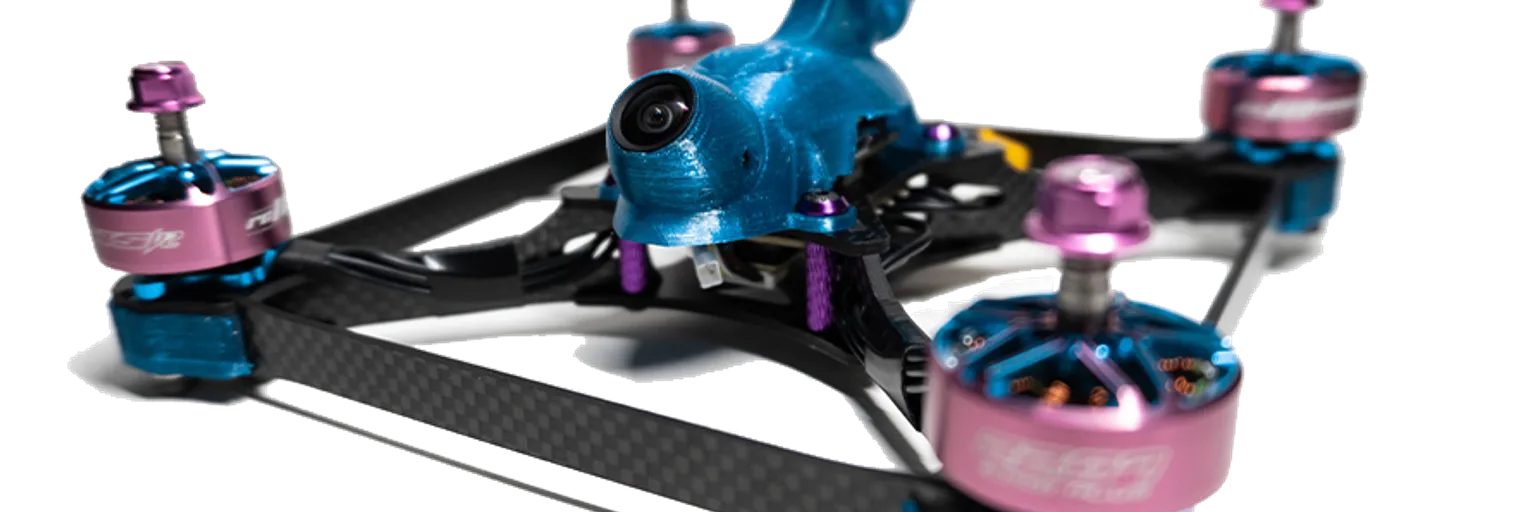
The MonoRace AI drone's decisive triumph over human world champions in FPV racing proves that compact, adaptive AI can master high-speed physical tasks in unpredictable real-world environments, opening new horizons for robotics.
Artificial intelligence promises universal acceleration, yet its real-world integration exposes significant economic disparities, skills gaps, and profound challenges across diverse fields from mathematics to media.
Donald Trump's insistence on rebranding 'artificial intelligence' as 'super intelligence' is a calculated political maneuver to control the narrative around emerging technology, rather than a mere semantic preference.
The decision by an indie game developer to pull their demo over fears of AI-generated copies reveals a critical juncture for intellectual property and independent creativity.
Vitalik Buterin's experimental 'paranoid mode' for AI agents, blending Tor, zkAPI, and local prompt rewriting, signals a crucial shift towards user-controlled privacy, despite inherent performance trade-offs.
Despite pioneering global AI regulation, Europe's silence in critical international discussions on AI safety reveals a worrying gap between policy ambition and practical implementation.
BNP Paribas's ambitious adoption of agentic AI signals a pivotal transformation in finance, raising questions about efficiency, strategic alliances, and responsible autonomous system deployment.
Artificial intelligence is rapidly transforming medical diagnostics, promising early disease detection through subtle vocal changes, yet raising significant questions about data privacy and the reliability of these new 'vocal biomarkers'.
Companies poised for market leadership by 2030 aren't just integrating AI; they are fundamentally transforming their business models and operations, shifting from incremental adoption to deep, competitive integration.
The alleged deletion of a reality TV season by an AI highlights the catastrophic data loss and systemic vulnerabilities introduced when creative workflows blindly trust automated, black-box AI systems without proper safeguards.
While OpenAI's chatbot maintains its overall user lead, Google's Gemini has decisively surpassed it on mobile, and Anthropic's Claude is rapidly gaining traction in Italy.
Artificial intelligence is rapidly moving beyond traditional tech applications, profoundly reshaping political landscapes, national security, and educational institutions, demanding urgent societal adaptation.
The remarkable feat of running sophisticated AI models natively on a jailbroken PlayStation 5 signals a pivotal shift towards accessible, local AI, challenging our perceptions of consumer hardware capabilities.
Anthropic's Claude is proving itself a sophisticated analytical partner in highly specialized engineering tasks, from uncovering cryptographic origins and finding algorithm weaknesses to optimizing quantum circuits.
BrainChip's new Sequora IP core promises to bring generative AI to battery-powered edge devices, but its success hinges on wide adoption in a market dominated by established semiconductor titans.