AI Warfare Is Here: The Real Question Is Who Pulls the Trigger
The UN’s warning is not about science-fiction robots. It is about whether humans can remain accountable when AI moves life-and-death decisions closer to the battlefield.
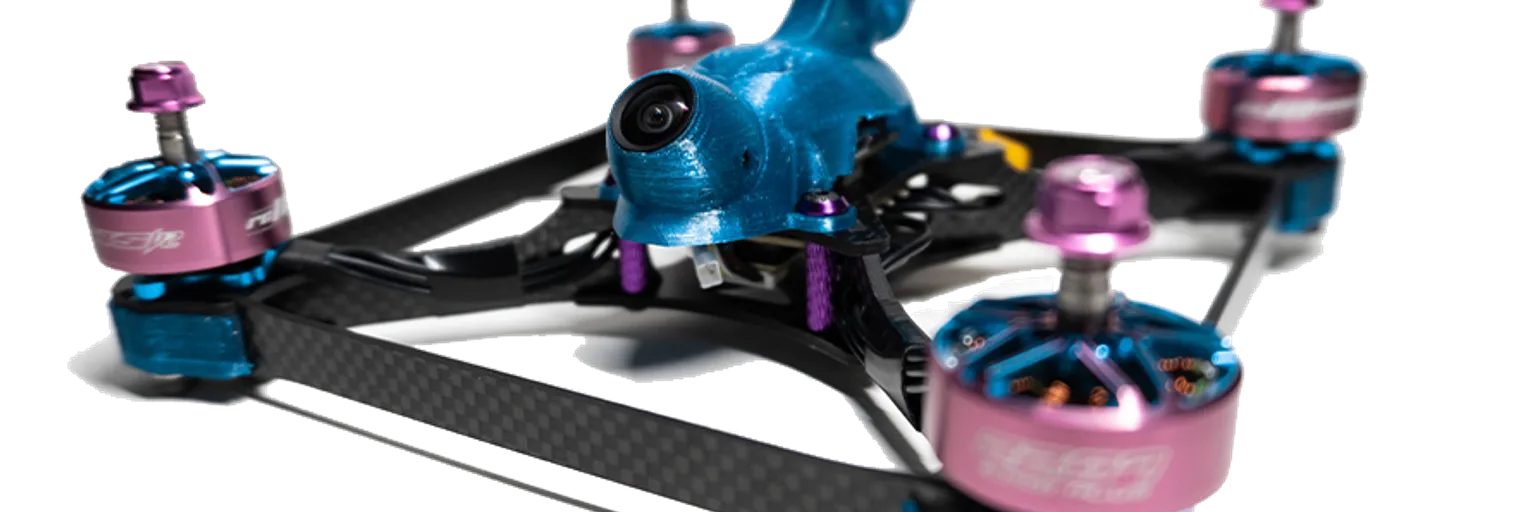
Photo: China News Service / Wikimedia Commons (CC BY 4.0)
The most dangerous phrase in the debate over AI weapons may be “human oversight.” It sounds reassuring, but it can mean anything from a person approving every strike to an operator supervising a system that chooses targets faster than anyone can understand. The United Nations’ latest warning matters because that ambiguity is no longer theoretical: AI is being built into military systems, and decisions are moving closer to the point of attack.
The UN and the International Committee of the Red Cross renewed their call on August 25, 2026, for restrictions on autonomous weapon systems. As UN News reported, the organizations warned that advances in AI could reduce human control over the use of force. The UN’s appeal was especially blunt: the world is “dangerously close to crossing a moral red line: the autonomous targeting of humans by machines.”
That warning deserves more than the usual image of a futuristic “killer robot.” The urgent issue is not whether a machine looks human, or whether it operates independently in every possible situation. It is whether a system can select and engage a target without meaningful human judgment—and whether anyone can still be held responsible when it gets that decision wrong.
The battlefield is not a clean data set
Supporters of autonomous weapons can point to an understandable military logic. Machines may process information rapidly, reduce exposure for troops and potentially identify targets with greater consistency than exhausted humans. Those are serious arguments, not science fiction.
But war is precisely where clean, stable conditions disappear. The International Committee of the Red Cross has emphasized that a combatant can surrender or become wounded, while civilians can enter an area of operations after a system has been activated. A target that was lawful moments earlier may no longer be one. The problem is not simply whether an algorithm can recognize an object. It is whether it can understand a changing human situation well enough to apply distinction, proportionality and precaution.
That is why the argument that AI might reduce human error is incomplete. It may reduce some errors while creating others that are faster, harder to detect and easier to repeat at scale. A mistaken human decision can be terrible. A mistaken automated process can turn one bad assumption into a pattern of harm before an operator has time to intervene. In our view, speed is not a neutral advantage when the decision being accelerated is whether someone lives or dies.
“Human in the loop” is not a magic phrase
The central policy question should therefore be more demanding than “Was a human somewhere in the chain?” It should be: what did that human actually control, what information did they receive, and could they meaningfully stop the attack?
Systems can occupy a spectrum. In some, AI may assist with navigation or suggest targets while an operator authorizes a strike. In others, an operator may supervise a system and retain an override. Fully autonomous systems, by contrast, can identify and engage targets according to programmed rules and changing conditions without direct intervention at the moment of attack. The boundaries are not always neat, particularly for loitering munitions and coordinated drone systems.
That ambiguity is politically convenient. It allows governments to promise human control while preserving systems in which human attention is reduced to approving a recommendation, monitoring too many machines at once or accepting a decision that cannot be explained in time. Meaningful control has to be operational, not ceremonial. It needs clear limits on where autonomy is permitted, reliable ways to cancel an action and records that allow investigators to reconstruct what happened.
The accountability question is even harder. Machines cannot be punished for violating international law. Responsibility must remain with the people and institutions that design, authorize, deploy and supervise them. If an AI system is opaque or behaves unpredictably, proving negligence or intent becomes more difficult. That is not a technical footnote; it can create an accountability gap in which the harm is obvious but responsibility is distributed across so many actors that no one is answerable.
The law should set boundaries before deployment sets them
The UN and Red Cross are asking states to negotiate legally binding rules, and the timing is important. Reuters reported that the organizations called for negotiations to begin urgently on an instrument with clear prohibitions and restrictions.
There is already a legal framework for armed conflict. International humanitarian law applies to weapons and methods of warfare, including AI-enabled systems. The unresolved question is whether existing principles are enough when the system making the targeting decision is difficult to predict, inspect or stop. Waiting for a catastrophic incident to clarify that question would be a failure of governance, not a demonstration of technological caution.
This is also where the public debate often becomes too binary. The choice is not necessarily between banning every military use of AI and allowing unconstrained autonomy. AI may assist with logistics, analysis or defensive functions without being granted authority to decide who should be killed. The red line should focus on delegating life-and-death targeting decisions to systems that lack meaningful human judgment and control.
The UN’s warning is valuable because it shifts the debate away from cinematic autonomy and toward institutional responsibility. Who authorized the system? Who understood its limits? Who could stop it? Who investigates when it fails? If those questions cannot be answered before deployment, they will not become easier after civilians are harmed.
Our verdict is straightforward: AI may help militaries process information, but it should not become the accountable party in a lethal decision. States should negotiate binding prohibitions and enforceable controls now, while human judgment can still be designed into the chain of command rather than reconstructed after the machines have already pulled the trigger.
No topics yet: start the first one.
More stories
Cyberpunk: Edgerunners 2 proves animation needs more than AI hype
Netflix’s new season expands Night City with riskier storytelling and striking craft, but its real lesson is about human direction—not documented AI assistance.

Coffee Is More Than Caffeine: Your Gut May Be Part of the Story
New research suggests coffee, including decaf, may reshape the gut microbiome in ways linked to mood, stress and cognition—without making it a miracle drink.

Maxwell isn't just a coding assistant: It's an AI performance game-changer
A new 'Code Execution Model' from doubleAI, backed by industry giants, promises to optimize AI performance by bridging the critical gap between software and hardware, fundamentally reshaping how we approach computational efficiency.

Why MonoRace's Victory Reshapes the Future of Autonomous AI
The MonoRace AI drone's decisive triumph over human world champions in FPV racing proves that compact, adaptive AI can master high-speed physical tasks in unpredictable real-world environments, opening new horizons for robotics.