Stellantis and Wayve's AI: A North American Drive to Autonomy in 2028
Stellantis and Wayve are bringing hands-free AI driving to the market by 2028, with initial deployment targeting North America, starting with Fiat 500e and Maserati Grecale prototypes.
AI-generated image
Could your next Fiat 500e or Maserati Grecale navigate bustling city streets or long highway stretches with minimal input from you? It's no longer a distant dream but a tangible near-future, thanks to Stellantis's aggressive push into artificial intelligence for autonomous driving. Their collaboration with British startup Wayve, showcased through recent tests on diverse models, signals a significant turning point for advanced driving assistance, promising to reshape how we experience our vehicles, initially in North America.
Automotive giant Stellantis and AI driving specialist Wayve recently unveiled advanced prototypes of the Fiat 500e and Maserati Grecale, both equipped with Level 2++ supervised automated driving systems. These vehicles, demonstrated at Wave by Vento 2026, represent a rapid acceleration in their joint technological partnership, which was first announced in May 2026. The goal is clear: to integrate Wayve's AI Driver technology with Stellantis's STLA AutoDrive platform, with a projected commercial debut for hands-free, door-to-door supervised driving in 2028, initially targeting North America, as Giornale La Voce reports.
What truly stands out is the speed of development. After an initial integration on the Jeep Grand Cherokee earlier in 2026, the teams managed to move the Fiat 500e and Maserati Grecale prototypes from integration to road testing in less than four weeks, as reported by Newsauto.it. This swift progress underscores the companies' commitment and the inherent flexibility of their chosen approach.
Embodied AI: The Brain Behind the Wheel
At the core of this advancement is Wayve's innovative approach, which they term "embodied AI." Unlike traditional Advanced Driver-Assistance Systems (ADAS) that rely on pre-programmed rules and meticulously mapped scenarios, Wayve's system is an end-to-end artificial intelligence designed to learn directly from real-world driving experience. This means it interprets the environment and makes driving decisions without depending on high-definition maps or manually coded rules, nor does it require specialized hardware beyond standard sensors.
This is a significant paradigm shift. The AI continuously learns and adapts to complex, variable conditions—be it a splotchy lane line under rain or unpredictable urban traffic patterns. By developing a generalizable AI capable of understanding and responding to the dynamic world, Stellantis aims to create a more robust and adaptable driving assistant. This technology adapts to the specific characteristics of each vehicle, including its geometry, dynamics, and sensor placement, ensuring the AI performs optimally across different models and driving conditions.
Scaling Innovation: From Compact to Luxury
The choice of the Fiat 500e and Maserati Grecale as test vehicles is no accident; it highlights a crucial aspect of this partnership: scalability. The Fiat 500e represents an electric compact car, while the Maserati Grecale is a luxury SUV. These two vehicles, along with the earlier integrated Jeep Grand Cherokee, possess vastly different dimensions, dynamic behaviors, and sensor configurations. The ability to transfer the same foundational AI software to such a diverse range of platforms in under four weeks demonstrates the system's inherent adaptability.
This approach is a strategic advantage for Stellantis. By developing a common technological base that can be easily integrated across multiple brands and models, the company can significantly reduce development times and costs. As Stellantis CEO Antonio Filosa noted, the partnership could streamline the development of advanced driving systems, benefiting the entire FaSTLAne 2030 strategy by fostering strength through collaboration.
The Nuance of "Hands-Free": Level 2++ Explained
The term "hands-free" often conjures images of fully autonomous vehicles, but it's important to understand the specifics here. The system unveiled is classified as Level 2++ supervised automated driving. According to SAE International classifications, Level 2 assistance means the vehicle can control both steering and acceleration/braking simultaneously. The "++" indicates an advanced form of this, allowing hands-free operation on certain routes, including urban and highway segments, even for door-to-door journeys.
Crucially, "supervised" means the driver remains responsible for the driving task and must be ready to intervene at all times. This is not a system where you can disengage and focus on other activities; the driver must stay attentive to the road, ready to take over if necessary. While it significantly reduces driver workload and enhances comfort, especially in monotonous traffic or long commutes, it does not equate to full self-driving. For that, the industry is looking at Level 4 and 5 systems, which Wayve and Stellantis are also exploring for future mobility services, though these require distinct development and validation paths.
The Road Ahead: Beyond 2028
Stellantis's collaboration with Wayve represents a pragmatic and aggressive step toward integrating advanced AI into mass-market vehicles. The target launch for the Level 2++ supervised hands-free driving in North America by 2028 makes the technology a near-term reality for consumers there. This is a critical move in a competitive automotive landscape where AI and automation are becoming key differentiators. Antonio Filosa encapsulates this vision, stating that "AI is transforming the vehicle into an intelligent system capable of perceiving, learning and adapting to complex real-world situations," while emphasizing that "technology only matters when it concretely improves people's lives."
While Level 4 autonomous capabilities, designed for driverless operation under specific conditions, are part of the long-term vision and require dedicated validation, the immediate focus on a robust Level 2++ system provides tangible benefits to drivers soon. This partnership solidifies Stellantis's commitment to leveraging cutting-edge AI to enhance safety, simplicity, and confidence at the wheel, paving the way for a more automated, intelligent, and enjoyable driving experience in the coming years.
No topics yet: start the first one.
More stories
YouTube's AI Search: More Than Convenience, It's Google's Next Big Play
YouTube's new 'Ask YouTube' conversational AI search is not just a convenient feature; it's Google's calculated move to deeply entrench AI, reshape video consumption, and solidify its digital ecosystem.

Mistral AI: Europe's AI Sovereign Bid Just Got Real
With record-breaking funding and a unique 'sovereign AI' approach, Mistral AI is challenging American tech giants, but scaling its ecosystem remains the ultimate test.
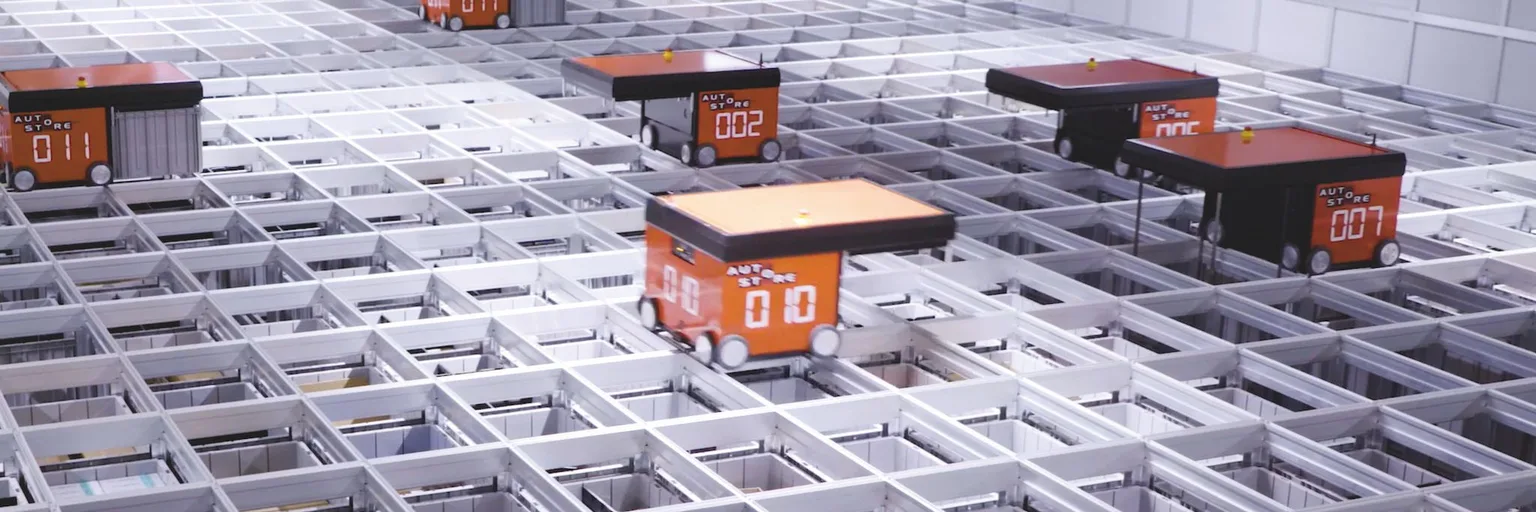
AutoStore's Autonomy Push: Are Lights-Out Warehouses Ready for Humans?
AutoStore's Fall 2026 product suite significantly advances warehouse autonomy through practical AI and robotics, yet the critical challenge remains integrating these intelligent systems with an evolving human workforce.
AI's Luxury Leap: Why Digital Senses Redefine Winemaking
Artificial intelligence is quietly revolutionizing luxury goods, proving its mettle in winemaking by detecting complex defects before human experts can, signaling a new era of augmented craftsmanship.