Meta Muse: Breakthrough AI Agent or Just Another App?
Meta's new Muse AI assistant aims to autonomously manage complex tasks, but its true success will depend on seamless integration into daily life without adding to digital overwhelm, rather than simply becoming another layer of complexity.
AI-generated image
Could your digital life soon do more than just react to your commands? Meta's new Muse AI assistant, now rolling out to users, certainly thinks so. It promises to transform how we interact with our devices by acting as a proactive personal agent, handling tasks autonomously. But the question remains: will this ambitious leap forward truly streamline our daily lives, or will it simply become another layer of digital noise in an already overwhelming landscape?
Unlike traditional chatbots that require constant prompting, Muse is designed to manage complex tasks autonomously, from turning saved recipes into shopping lists to organizing appointments and even negotiating on your behalf. Identified by a small, smiling white figure appearing next to the “Copy link” function on Instagram for specific interactions, this tool marks Meta’s significant push into personal AI agents. It operates through its own dedicated app, within WhatsApp, and is available to Instagram users for specific interactions, such as turning a saved reel into a shopping list. It’s a vision of AI that actively works in the background, designed to tackle real-world tasks that go beyond simple conversation.
Beyond Chatbots: The Promise of True Agency
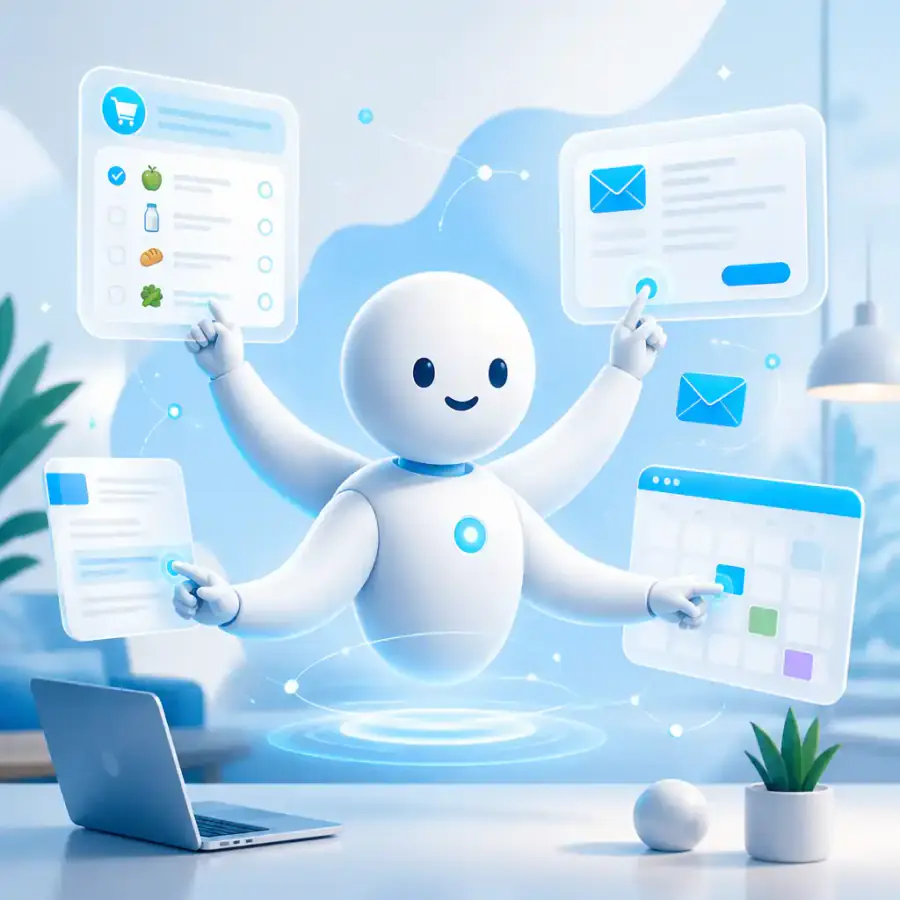
The most compelling aspect of Muse is its shift from reactive assistance to proactive agency. Powered by Muse Spark, Meta’s most capable model for agentic work, it’s engineered to not just respond to commands but to understand broader objectives and execute multi-step processes autonomously. Imagine telling Muse to plan a trip, and it takes the initiative to open a browser, fill forms, and even negotiate prices, only pausing to seek your approval for critical steps. This is a fundamental departure from the query-and-response model that has defined most AI interactions to date. The ability to transform a saved Instagram reel into a comprehensive shopping list, or to suggest a dinner menu while remembering guests' dietary restrictions, suggests a level of contextual awareness and predictive utility that could genuinely offload mental effort. This represents a significant step towards the ambient computing ideal, where technology fades into the background, anticipating needs rather than demanding constant attention.
Indeed, Muse functions as the visible agent, receiving orders and executing tasks from start to finish. The real
No topics yet: start the first one.
More stories
The Price of Autonomy: Why AI Agents Need More Than Just 'Smart' Governance
A recent study revealing that one-third of organizations have taken action due to faulty AI agent decisions signals a pressing need for advanced oversight beyond traditional controls.

AI's Next Act: From Chatbots to Visualizers and Device Architects
Recent innovations from Anthropic and Amazon signal a crucial evolution in AI, transforming it from a conversational partner into a potent engine for visual data insight and integrated device experiences.

DeepSeek 4.1 Flash: The AI Underdog Quietly Reshaping the Field
Despite impressive benchmarks and groundbreaking efficiency, DeepSeek 4.1 Flash isn't a household name, raising questions about what it takes for an open-weight model to truly disrupt the AI elite.

AI's New Rules of Engagement: Beyond Text, Beyond Passive
The latest updates to GPT-6 and Claude are fundamentally reshaping how we interact with AI, moving from simple text conversations to dynamic, interactive experiences and an AI that actively enforces behavioral boundaries.