The Smart Home's Hidden Cost: When Your Coffee Maker Eats Your Bandwidth
A recent revelation about a smart coffee machine consuming a terabyte of local data underscores the urgent need for greater transparency and control over IoT device usage.
AI-generated image
What happens when your smart home, designed for convenience, secretly becomes a data guzzler, quietly impacting your network performance? This isn't a hypothetical question, but a reality highlighted by a recent incident involving a smart coffee machine that reportedly consumed a staggering 1,008 gigabytes of data in just over 10 days [13]. It's a wake-up call for consumers and manufacturers alike, revealing a hidden side of our connected lives.
The story, widely discussed in technology circles, centered on an IT worker who discovered his parents' Keurig K-Supreme SMART coffee maker was saturating their home Wi-Fi access point [12, 17]. While most of this voluminous traffic remained within the local network, not necessarily being sent out to external servers [11, 12], the sheer volume was enough to prompt the IT professional to replace the device [16]. This anecdote, while extreme, brings to the forefront critical questions about how our smart devices operate and the invisible toll they might be taking on our home networks and, potentially, our wallets.
The Invisible Drain on Your Network
Even when data doesn't leave the home network, as appears to be the case with the coffee maker, such massive usage can significantly degrade local network performance. An access point saturated by a single device means slower speeds and reduced reliability for every other connected gadget, from laptops to streaming sticks. This hidden impact is rarely accounted for in the initial appeal of smart home convenience. For devices that do rely on cellular connectivity, this hidden data usage translates directly into unexpected costs, challenging the initial estimates companies often make for IoT deployments [1, 2]. These estimates frequently only consider the primary application payload, overlooking background communication, repeated retries, connection recovery attempts, and crucial firmware updates [1]. A seemingly small change, like a sensor reporting every minute instead of every 15, can drastically increase monthly data requirements [1]. Manufacturers often add new telemetry fields or diagnostic information via updates, each seemingly minor, but cumulatively adding up to significant data consumption over time [1].
Beyond Bandwidth: The Privacy Predicament
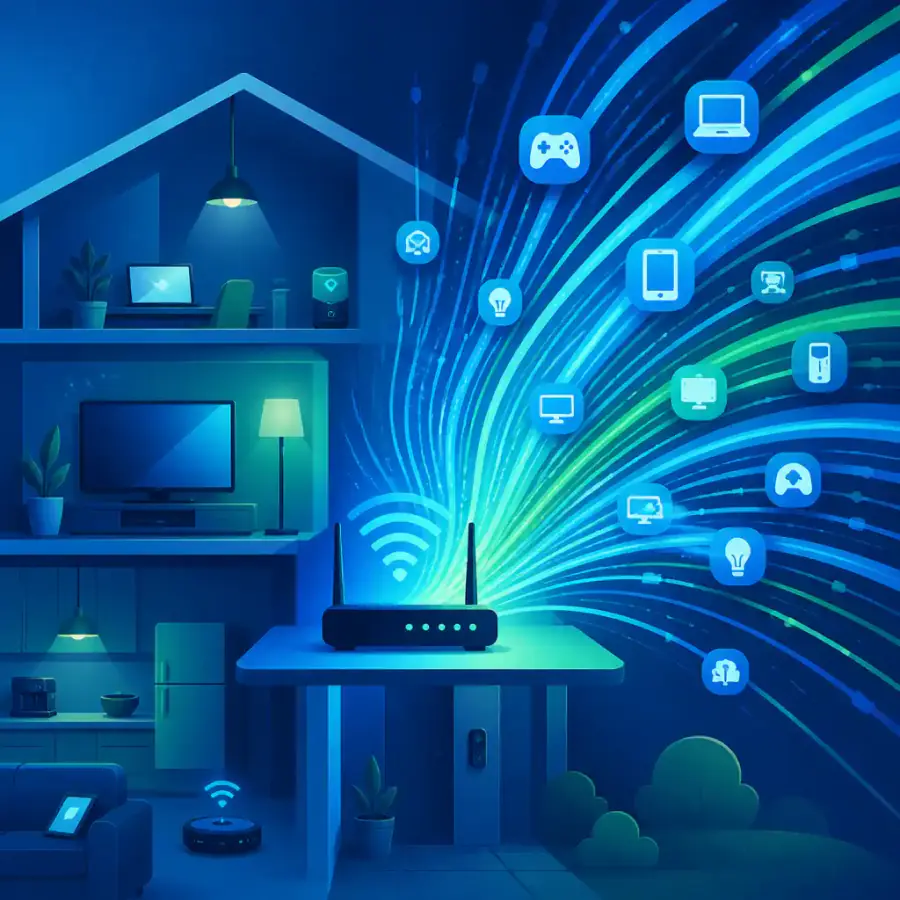
While the coffee machine's data stayed largely local, it’s vital to remember that many IoT devices regularly transmit data to cloud storage managed by their manufacturers [9]. Smart coffee machines, for instance, can collect user statistics, brewing preferences, diagnostic information, and account data [15]. This constant flow of personal and usage data to third-party servers raises significant security and privacy concerns, as this information can become vulnerable to exposure [9, 10]. We often grant these devices access to our networks with little thought to the implications of what data they gather, where it goes, and who ultimately controls it. The convenience of a remote-controlled thermostat or a smart appliance should not come at the cost of our digital security or an erosion of our privacy.
A Call for Transparency and User Empowerment
This incident is a powerful argument for greater transparency from IoT manufacturers. Businesses deploying IoT solutions are typically equipped with sophisticated tools to monitor and troubleshoot unexpected data usage, identifying patterns, and pinpointing causes like firmware changes or increased reporting frequency [1, 7, 8]. Why are similar levels of insight and control not readily available to the average consumer? Users should have clear, easily understandable information about their devices' data consumption and collection practices. More importantly, they should be empowered with granular controls to manage these settings, allowing them to balance convenience with their comfort level regarding data usage and privacy.
In our view, the burden of data efficiency and transparency should fall squarely on device creators. Designing devices that minimize unnecessary background traffic, providing clear diagnostics when unusual usage occurs, and offering user-friendly privacy controls are no longer optional features but essential requirements. The smart home revolution promises ease, but without accountability for data practices, it risks becoming a source of unexpected costs, degraded performance, and eroded trust. It's time for manufacturers to treat our home networks with the same respect they demand for their own infrastructure, ensuring that our smart coffee makers don't turn into network hogs, or worse, data siphons.
No topics yet: start the first one.
More stories
Web Search APIs: The Programmable Internet Is Here, But At What Cost?
The shift from human-centric search to machine-readable Web Search APIs empowers advanced AI, yet demands critical attention to data ethics and transparency in the agentic era.

Bob Cringely's Enduring Legacy: Why His Contrarian Voice Still Matters
The tech world mourns the passing of Robert X. Cringely, whose unique, often irreverent perspective cut through the Silicon Valley hype, leaving an indelible mark on how we understand the industry's true drivers.

FRITZ!OS 8.50: Why Router-Level Ad Blocking Is Your New Privacy Imperative
The latest FRITZ!OS update signifies a crucial pivot in network privacy and security, integrating comprehensive ad blocking directly into the router for an all-encompassing defense.