The RAM crunch isn't ending soon: AI demand redefines the memory market
Memory executives warn that the global RAM shortage will persist until at least 2028, largely driven by insatiable AI data center demand, setting the stage for higher prices across consumer tech.

AI-generated image
Are we trapped in an endless cycle of silicon scarcity? For years, the tech industry has grappled with supply chain issues, but the latest forecast from leading memory executives suggests that the RAM shortage isn't merely a temporary bump; it's a fundamental shift that could reshape pricing and availability for years to come. With projections extending the crunch until at least 2028, and some even hinting at 2030, consumers and companies alike must brace for a new reality where RAM, the workhorse of digital processing, remains a bottleneck.
The alarm bells have been ringing for a while, but they are now louder than ever. Executives from major players like Micron have stated that the memory shortage won't improve until 2028, citing the significant time it takes to achieve "meaningful output" from new manufacturing capabilities, as Yahoo Finance reported. This sentiment is echoed by Samsung's EVP Kim Jaejune, who predicts the global RAM shortage will persist through 2027 or 2028, pointing to exploding AI data center demand as the primary driver, according to PCWorld. Even more concerning, the chairman of SK Hynix, a top DRAM producer, has warned the shortage could last until 2030, a perspective PCMag highlighted. Prices for memory components sold for 2027 are already "much higher than 2026 prices," an indicator that this isn't a speculative crisis but a tangible market shift that will soon trickle down to the end-user, as Ars Technica notes.
The AI Gold Rush is the True Demand Driver
Unlike previous memory cycles often characterized by oversupply correcting to undersupply, this current shortage appears to be structurally different, primarily due to the unprecedented demand from artificial intelligence. The insatiable appetite of AI data centers for high-bandwidth, high-capacity RAM is rewriting the rules of the memory market. Every new large language model, every AI training workload, and every inference engine requires vast arrays of memory, far exceeding typical consumer or even enterprise server needs. This isn't just about more servers; it's about servers packed with vastly more specialized and often more expensive memory modules. The scale of this demand is so immense that it outstrips the industry's ability to ramp up production quickly, even with significant investment.
Manufacturing Bottlenecks Mean No Quick Fixes
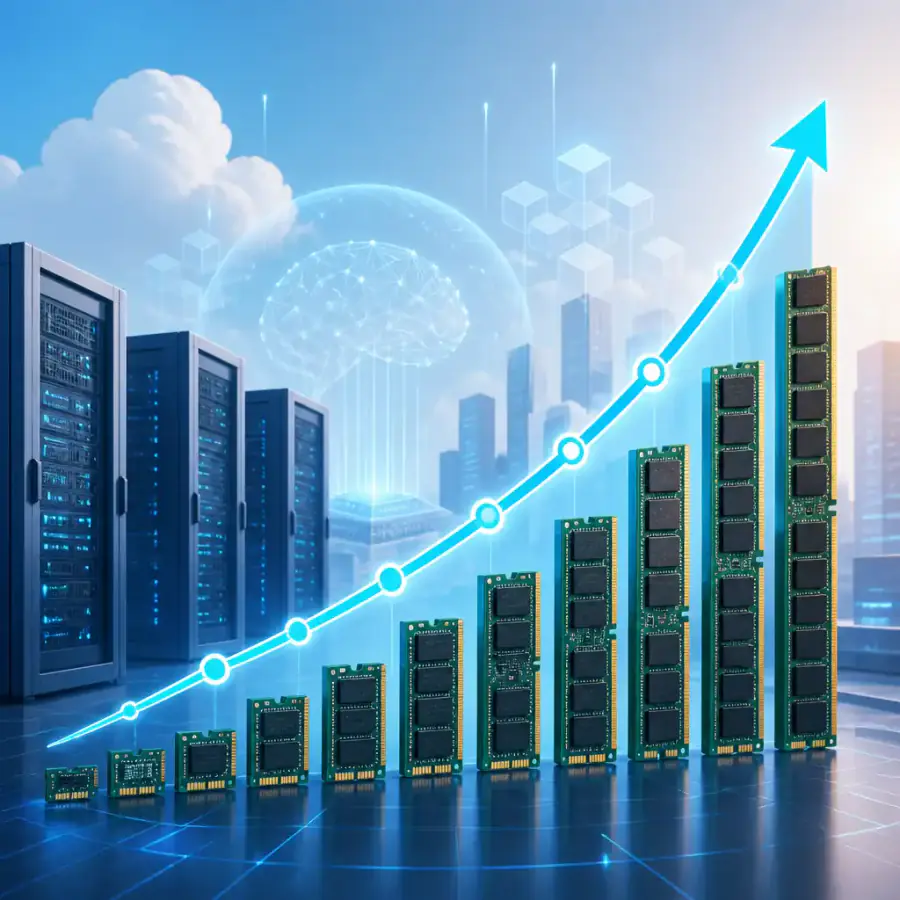
Creating sophisticated memory chips isn't a task that can be sped up overnight. The fabrication plants, or fabs, required for cutting-edge RAM production are multi-billion dollar investments that take years to design, construct, equip, and bring online to achieve consistent, high-yield output. The process involves intricate lithography, specialized materials, and a highly controlled environment. When Micron's CEO talks about the time required for "meaningful output," they are referring to this complex, time-consuming journey from groundbreaking to mass production. This inherent inertia in the manufacturing process means that even with all major players – Micron, Samsung, and SK Hynix – acknowledging the problem, a significant increase in supply remains years away. This creates a difficult situation where demand surges rapidly, but supply can only respond sluggishly, maintaining upward pressure on prices.
Consumers Will Pay a Premium for Every Upgrade
For the average consumer, this prolonged shortage translates directly into higher prices for virtually any device containing RAM. Think about it: a new smartphone, a gaming PC, a laptop, or even smart home devices and connected cars—all rely heavily on RAM. If memory component prices remain elevated, or even increase further for 2027 and beyond, manufacturers will inevitably pass these costs onto the consumer. This could lead to a slowdown in upgrade cycles, with people holding onto their existing hardware for longer, or making more conservative choices when they do buy new devices. The idea of getting 64 GB RAM for a mainstream build might become a luxury rather than a performance consideration, especially if prices continue their ascent. The era of cheap, abundant RAM appears to be on hold, and we must adjust our expectations accordingly.
This isn't just about a temporary inconvenience; it's about a recalibration of the value chain in the tech world. With major memory manufacturers indicating that the supply chain balance isn't expected to normalize until late 2028, as TechPowerUp detailed, we are entering a sustained period where memory is a premium resource. For consumers, this means planning hardware purchases carefully, potentially prioritizing efficiency and longevity over raw power. For the industry, it signals an urgent need to innovate not just in chip design, but in how we manage and utilize this increasingly precious digital commodity. The scramble for RAM is far from over.
No topics yet: start the first one.
More stories
ESP32's Hidden Superpower: A New Era for Low-Cost Radio
The recent discovery of dormant Software Defined Radio capabilities within common ESP32 microcontrollers could revolutionize access to advanced wireless projects for hobbyists and innovators.

Superfluid Qubit: How a Predicted 100x Error Drop Could Change Everything for Quantum Computing
A conceptual superfluid helium-3 qubit design promises vastly reduced error rates, potentially accelerating the path to stable, scalable quantum computers and unlocking unprecedented computational power.