ESP32's Hidden Superpower: A New Era for Low-Cost Radio
The recent discovery of dormant Software Defined Radio capabilities within common ESP32 microcontrollers could revolutionize access to advanced wireless projects for hobbyists and innovators.

AI-generated image
What if the humble, ubiquitous ESP32 chip, known for powering countless Wi-Fi and Bluetooth projects, was secretly capable of much more? That’s precisely the intriguing reality emerging from the world of embedded systems, as various independent projects have unearthed dormant Software Defined Radio (SDR) capabilities within these affordable microcontrollers. This isn't just a technical curiosity; it represents a significant shift that could democratize advanced wireless experimentation and innovation.
Over the past few days, reports have highlighted how several ESP32 models can now function as internal SDRs. This unexpected functionality allows them to capture raw IQ baseband samples, with certain models like the ESP32-C5 covering frequency ranges of 2.2–2.7 GHz and even 4.8–6.0 GHz, all with impressive sampling rates of up to 80 MS/s, as rtl-sdr.com reports. This isn't about adding external hardware; it's about unlocking existing, internal radio components, particularly the integrated 2.4 GHz Wi-Fi radio, and repurposing them through clever software—a true testament to the open-source community's ingenuity, as evidenced by projects like ESP-SDR firmware on GitHub.
The Democratization of Wireless Innovation
For years, Software Defined Radio has been a powerful tool, allowing engineers and enthusiasts to manipulate radio signals through software, rather than dedicated hardware. However, entry into this field often required specialized, and sometimes costly, equipment. The ESP32 changes this landscape dramatically. We believe its inherent low cost and widespread availability—qualities that have already made it a favorite for countless IoT projects—now extend to sophisticated radio applications. Imagine hobbyists, students, and small development teams gaining access to advanced signal analysis and transmission capabilities without the prohibitive price tag of traditional SDR hardware. This accessibility could foster an explosion of innovation in areas from custom communication protocols to environmental sensing, empowering a new generation of creators.
Unleashing New Project Possibilities
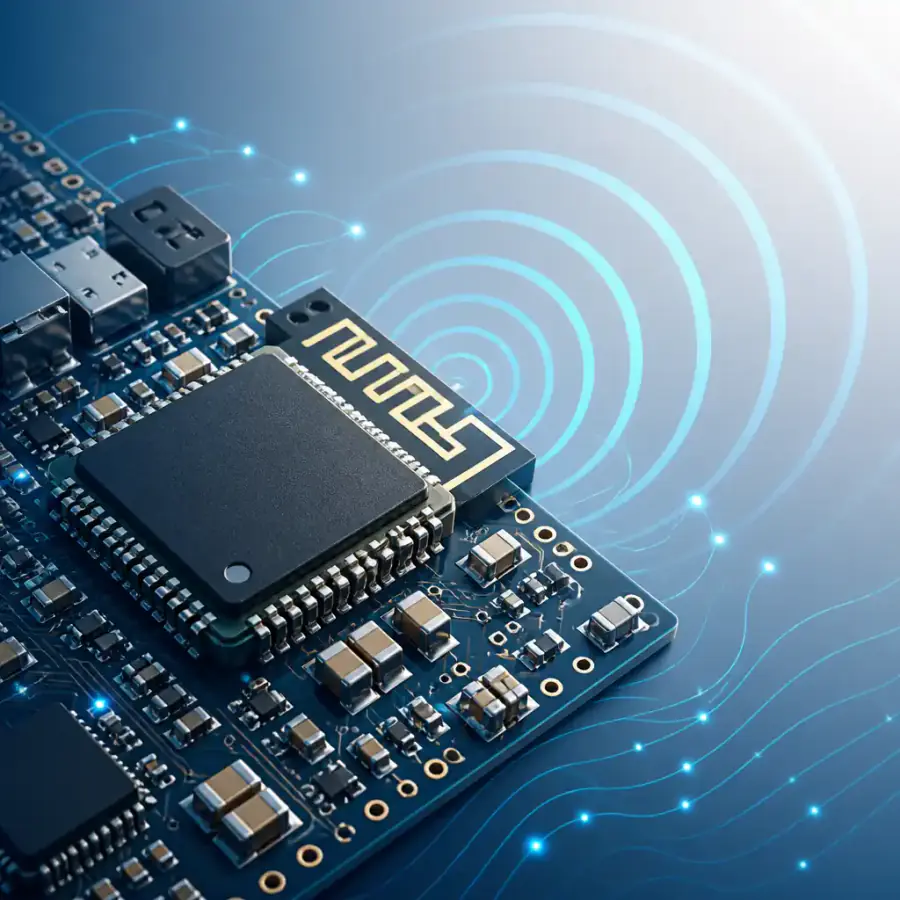
The practical implications of this discovery are vast and exciting. By leveraging the ESP32's internal radio as an SDR, developers can now build projects that were previously out of reach for budget-conscious endeavors. For instance, the documentation hints at applications like OpenTrafficMap, which uses these capabilities to interact with traffic lights, vehicles, and other road sensors, as seen in discussions on Hacker News. Beyond traffic management, we envision scenarios where ESP32-based SDRs could be used for basic spectrum analysis, creating custom remote controls, or even developing rudimentary radar systems. The ability to capture and process raw radio signals opens the door to understanding and interacting with the invisible wireless world in entirely new ways, potentially leading to novel solutions in areas like smart agriculture, personal security, and local area networking.
Not a 'True SDR,' but a Smarter Move
It's important to nuance the discussion by acknowledging that, as rtl-sdr.com notes, the ESP32 doesn't possess
No topics yet: start the first one.
More stories
The RAM crunch isn't ending soon: AI demand redefines the memory market
Memory executives warn that the global RAM shortage will persist until at least 2028, largely driven by insatiable AI data center demand, setting the stage for higher prices across consumer tech.

Superfluid Qubit: How a Predicted 100x Error Drop Could Change Everything for Quantum Computing
A conceptual superfluid helium-3 qubit design promises vastly reduced error rates, potentially accelerating the path to stable, scalable quantum computers and unlocking unprecedented computational power.