Apple's Smart Home Event: Reasserting Control with AI or Just Catching Up?
With an unexpected October event focused squarely on the smart home, Apple seems poised to either tighten its ecosystem grip with advanced AI or finally contend with rivals in a maturing market.
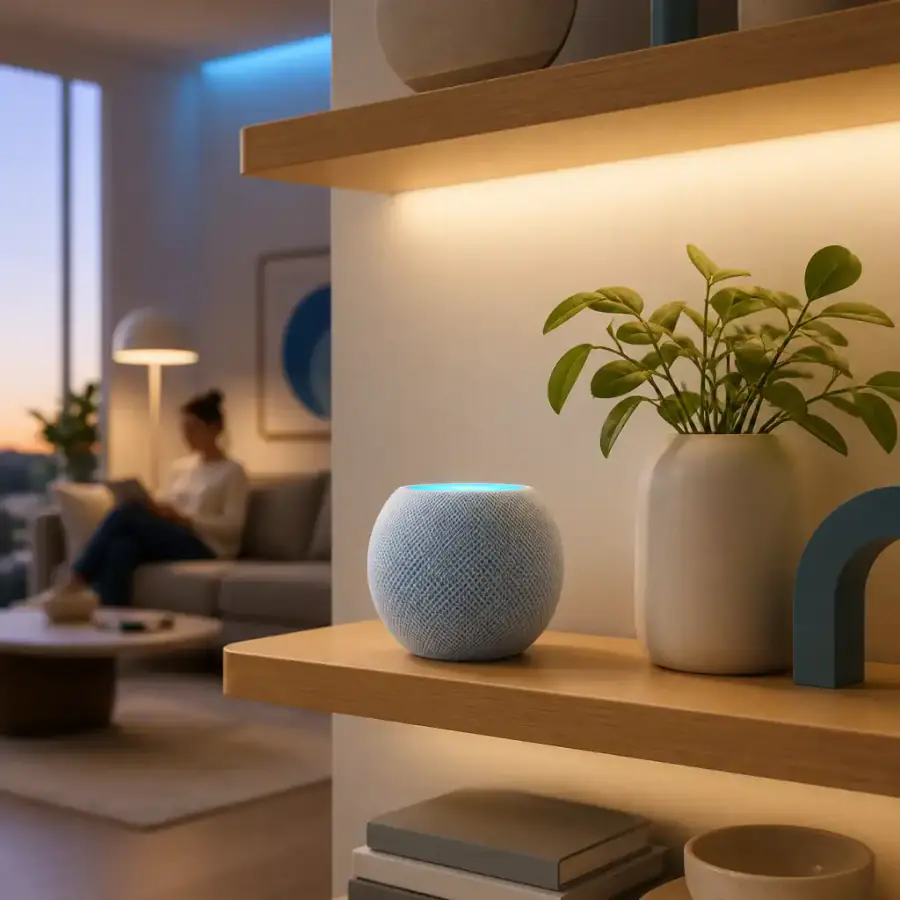
AI-generated image
Is Apple finally ready to stake its claim in the smart home, or is this week's surprise event simply a long-overdue response to a market that has largely moved on without it? For years, Apple's smart home ambitions felt like an afterthought, a side project to its booming mobile and computing divisions. But the upcoming "Welcome Home" event could change that perception dramatically.
Apple has confirmed a special event for Tuesday, October 13, 2026, to be held at 9 a.m. Eastern in New York City. The focus is squarely on new smart home products, a clear indication that Cupertino is making a concerted push into this increasingly intelligent space, as reported by outlets like MacRumors and AppleInsider. Expectations are high for a refreshed HomePod mini, an updated Apple TV 4K, and, most notably, the long-rumored "HomePad" – Apple's first dedicated smart display for the home.
The AI Imperative: Weaving Intelligence into the Home Fabric
One thing is abundantly clear: Apple's smart home strategy is inextricably linked to its renewed focus on artificial intelligence. The new Siri, powered by Apple Intelligence, is expected to be the central pillar of these upcoming devices. Rumors suggest the HomePod mini 2 will leap from the S5 to an S9 chip or even superior, enhancing its compatibility with the new AI. Small audio improvements, new colors, and an updated wireless chip (likely the N1 from the iPhone) are also anticipated. Similarly, the Apple TV 4K is expected to upgrade from the A15 Bionic to the A17 Pro, enabling local execution of Apple Intelligence functions, according to los40.com. This isn't just about faster voice commands; it's about deeper contextual understanding and more capable on-device processing. We believe this represents Apple's attempt to differentiate through a more private and integrated AI experience, leveraging its ecosystem strength to offer seamless control and personalized interactions that go beyond what current smart assistants provide.
A Bold Step into the Smart Display Arena
The most intriguing new product is undoubtedly the "HomePad," Apple's long-awaited foray into the smart display market. This device, internally codenamed J490, has been delayed until 2026 due to pending improvements in Siri and its integration with Apple Intelligence, as HardwarePremium reported. Expected to arrive between October of this year and early next, the HomePad is rumored to feature a 7-inch square screen with an A18 chip, running a new operating system internally called homeOS. This device would enable FaceTime calls, smart home management, and advanced interactions with Siri's AI, effectively combining elements of an iPad, Apple TV, and HomePod into a central control panel, as El Nacional suggests. Analysts hint at two versions: a fixed wall-mounted display and one with an integrated speaker base, directly competing with devices like Google Nest Hub and Amazon Echo Show.
Beyond the Core: A Broader Smart Home Vision
While the refreshed HomePod mini 2, Apple TV 4K, and the HomePad are the immediate focus, Apple's ambitions for the smart home extend further. The company reportedly plans to venture into manufacturing its own home automation accessories, starting with security cameras and smart doorbells. There's also speculation about an even more advanced smart display: a desktop device with
No topics yet: start the first one.
More stories
Apple's Touchscreen MacBook: A Philosophical U-Turn with Major Market Waves
The long-rumored touchscreen MacBook Pro represents a monumental shift in Apple's design principles, poised to redefine macOS and challenge the established norms of premium laptops.

iPhone Security: The Unending Chess Match Against Surveillance
New reports suggest law enforcement has found another way to bypass iPhone security, reigniting the critical debate over digital privacy and the continuous struggle between device makers and surveillance tools.