Firing the cyber chief won't fix the outages. Boring engineering will
Sean Cairncross's exit after a week of outages makes cybersecurity look like a casting problem. Resilience is funded maintenance and clear ownership, not a new name on the door.
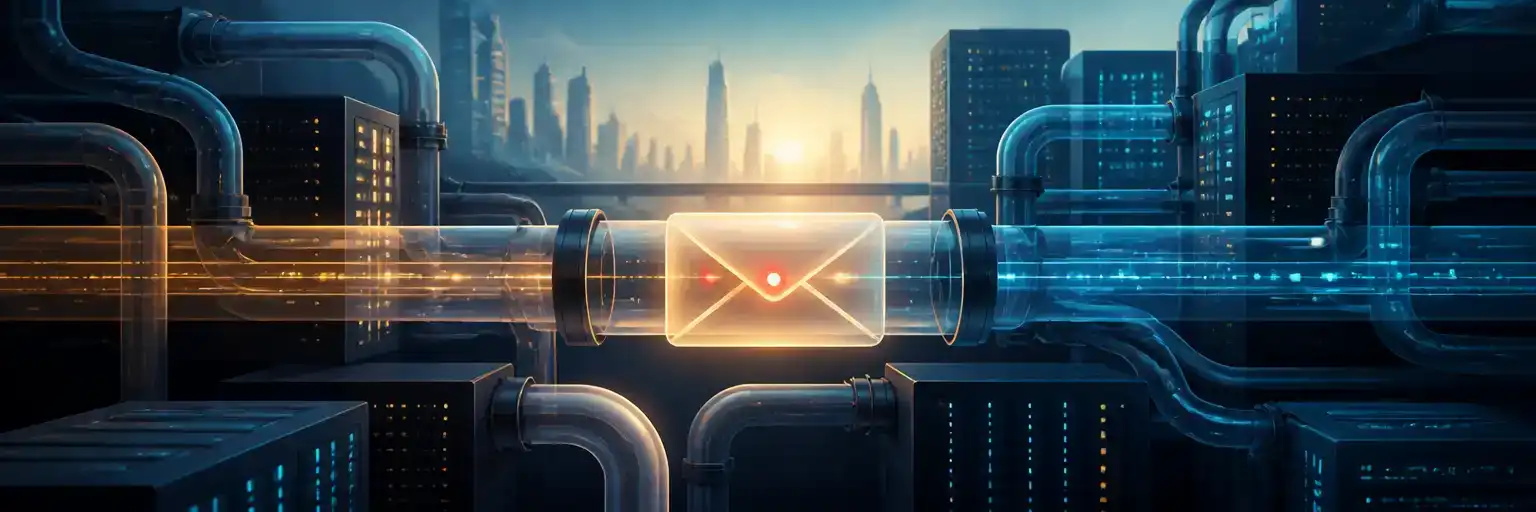
AI-generated image
When the lights flicker, the easiest fix is to replace the electrician. It feels decisive, it fits in a headline, and it changes nothing about the wiring. That is our reading of the departure of Sean Cairncross, the White House national cyber director, and it says a lot about how Washington thinks about cybersecurity.
A week of outages, one name on the door
The facts, as reported, are simple. According to AP, the White House named Kirsten Davies, the Defense Department's chief information officer, as the new national cyber director after a series of outages that disrupted travel, work and banking. Other reports say she will serve in an acting capacity, and a permanent appointment needs Senate confirmation. The disruptions touched Microsoft services, air traffic control, major banks and the National Security Agency's internal network.
The reasons for the exit are murky. Two White House officials said chief of staff Stephen Miller pushed for the change, and one of them claimed Cairncross "lacked the strong cyber credentials to perform the job," as IBTimes reports. Other sources called the departure amicable, and Fox News, per other outlets, said he did not want to serve another two years. Officials say they have found no evidence the outages were connected or caused by cyberattacks.
If the outages weren't an attack, the firing makes less sense
Here is the contradiction. The administration's line is that these were separate technical events. Trump said, "These are individual events." Homeland Security Secretary Markwayne Mullin told lawmakers he was 98% confident the outages weren't caused by malicious activity from foreign actors, per Hindustan Times. Cairncross himself reportedly described them as problems caused by upgrades to older systems.
Both things can't be the whole story. If these were unrelated glitches, a coordinator of cyber policy isn't the person who failed. If they point to a deeper fragility, then swapping the coordinator doesn't address it. Either way, the personnel move looks to us like a political answer to a public mood. Even allies of the president, as ABC reports, accused the administration of lying or hiding information about the true cause. A new face is a cheap way to say "we heard you."
We should be fair to the critics: Cairncross did not have a technical cybersecurity background, and a credentials argument isn't absurd. Davies has a long résumé in corporate technology and cyber roles. But credentials are not capacity. The office coordinates policy; it doesn't patch aging systems at an airline, a bank or a federal agency.
Resilience is a budget line, not a personality
What actually prevents a bad week? In our view: maintenance of old systems, redundancy, and clear answers to "who owns this?" when a vendor, a cloud provider and an agency all touch the same service. The JPMorgan episode is a small, telling example: the bank said it learned of the incident through its service providers, whose marketing data may have been accessed. Third-party risk is exactly the kind of unglamorous problem that no single director solves with a speech.
In her post on X, Davies wrote that the US must "modernize and drive resilience into the foundations our great nation runs on." We agree with the sentence. The test is whether it comes with money, mandates and a stable team behind it.
The signals on stability aren't great. Several senior officials from the office have left in recent months, including a policy adviser who went to OpenAI. The nominee to lead the Cybersecurity and Infrastructure Security Agency, Michael LoSapio, faces holds from senators of both parties. An acting director, a contested agency nominee and a thinned-out office is a lot of interim for a field where continuity is the whole job.
Our verdict
Don't judge this by who sits in the chair. Judge it by what happens in the next two quarters: is there a public accounting of what failed in each outage, funding to retire or harden the legacy systems involved, and a confirmed leadership team that stays put? If the answer is only a new name and a confident post on X, we suspect the next bad week will bring the next firing, and the cycle will repeat.
Cybersecurity is treated as a casting problem because casting is fast and visible. Engineering is slow and dull, and it's the only thing that works.
No topics yet: start the first one.
More stories
A model file is not just data: the GGUF malware scare proves it
Five poisoned GGUF repos on Hugging Face drew 2,428 downloads. The "GGUF is safe" advice was always shaky, and open-weight AI needs signed, scanned files now.
Sandboxing the model isn't enough if the server is shared
A new experiment shows sandboxed models can pass bits through shared inference infrastructure. Isolation has to include the serving layer, not just the model's own box.
The EU Academy breach shows no low-value system is too boring to hit
An AI-assisted attack on the European Commission's learning platform suggests defenders can't write off low-value systems: automation may make every forgotten corner worth the effort.
"We don't train on your data" is a slogan, not a retention policy
OpenRouter's offboarding of three inference providers shows that sending prompts to a third-party API is a trust decision. Buyers should ask for proof, not promises.